
Not every great distro makes a splash on the front page of DistroWatch or in mainstream coverage. These are the five Linux distros from 2025 that we think merit a closer look.
The FOSS Force Distro of the Week — 2025’s Most Underrated Distros
Last week, we mentioned that FOSS Force was not going to hamper the holiday season with reviews of distros, although truth be told they are cued up and ready to go for the New Year starting next Thursday.
Today, we’re going to bring out five underrated distros that I tested in this year’s Distro of the Week columns.
To be honest, this was a very hard list to make. As I mentioned last week, I never met a distro I didn’t like, and every one of the distros I reviewed this year has, to some degree, been nothing short of phenomenal.
Before I start, I apologize for picking only five. There are many others that deserve mention. However, these are five that stood out as underrated, and as such deserve special acknowledgment. Like last week, we’re going to do them in reverse order:
- CachyOS
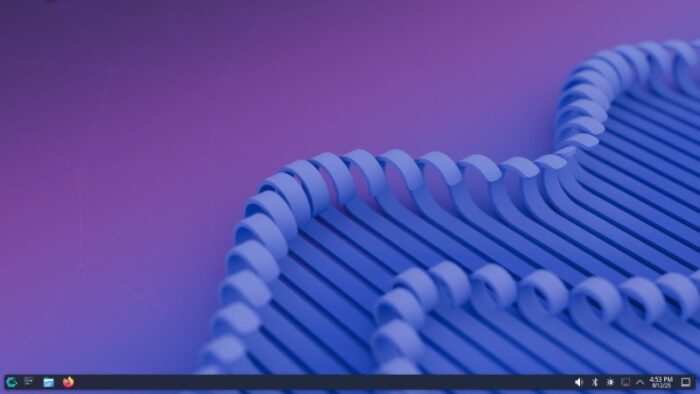
CachyOS’s default is KDE Plasma, but there are 15 other desktop/window manager options from which to choose. Back in August, we at FOSS Force went to the top of Distrowatch’s list — which, to be fair, only counts how many people are looking at a particluar distro’s website — and decided to review Germany’s CachyOS. CachyOS is an Arch-based distro with KDE Plasma as its default desktop, but also includes 15 — count ’em, 15 — additional desktop environment and window management options from which to choose.
That’s no small feat.
Because CachyOS is optimized for modern CPUs and aimed at gamers, the performance is nothing short of remarkable. Both machines I used aptly and admirably handled work and play software, sometimes both running at the same time, with ease and balance.
CachyOS nails the Linux experience on several levels and should be an inspiration for developers focused on performance and quality. It hits all the right notes in day-to-day use, and adding software is drop-dead simple. Using multiple programs simultaneously is a breeze.
In addition, the default KDE Plasma version should be a shoo-in for new users, while those with more Linux experience have a wide range of desktop environments and window managers to choose from. Even if the Distrowatch listing ranks distros by eyeballs, CachyOS is nevertheless a formidable distro.
- SparkyLinux
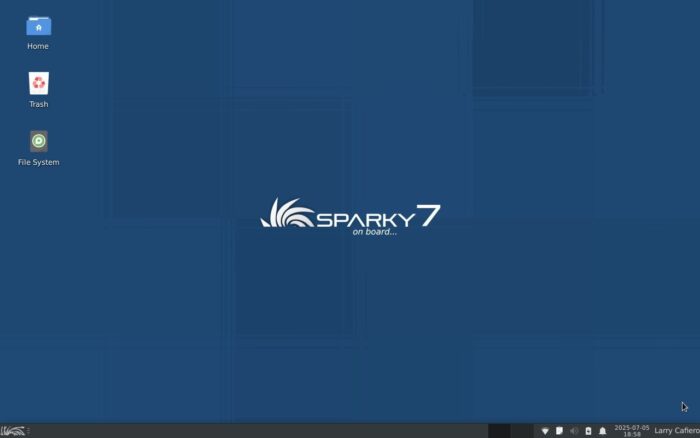
“Sparky on board…” Thanks for the heads-up. This Polish distro, based on Debian and reviewed in July, was a little more than just a pleasant surprise. At the time of my review, the rolling release distro was serving version 7.7 “Orion’s Belt,” which is now up to 8.1 “Seven Sisters.” I was primarily impressed by the fact that the distro gave users options, which is what Linux is all about, right?
Perhaps the feature that sets Sparky apart from other distros is its package manager. APTus AppCenter is a unique program that allows you to install software by clicking icons that are grouped by category. The flexibility of adding software this way is a feather in Sparky’s cap, and it could arguably be a godsend for Linux newcomers. It’s not too bad for those of us who have been around the Linux block a few times as well.
Using Sparky was an almost flawless experience. The Debian base under the hood seemed to hum as I used several apps at the same time, with no slowdown or stutter. Visiting Facebook and other social media platforms was handled with ease, and Thunderbird took care of e‑mail without a stumble.
Overall, SparkyLinux is fast and versatile — two items that should be the hallmark of Linux distros across the board. It adds even more versatility by providing its own tools and scripts for easier system management. In other words, it would be a good entry into Linux for beginners, while holding its own for greybeards.
- Voyager Debian Edition
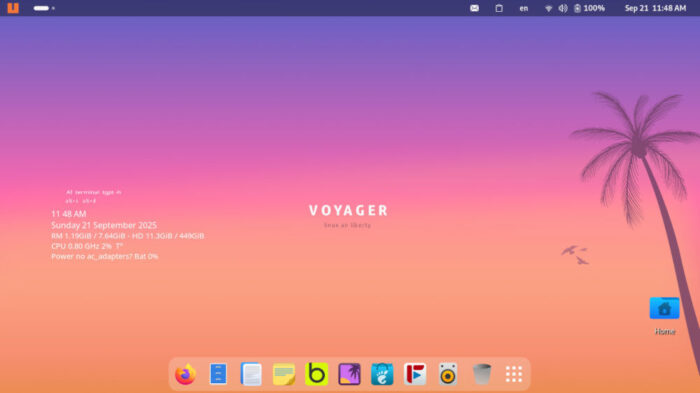
Voyager 13.1 Debian features Gnome as its desktop environment. Mon dieu! France’s Voyager Linux 13.x Debian was reviewed in September, and we were not expecting there to be a little French savoir-faire taking this Linux distro somewhere new. The distro uniquely bills itself on its website as “a human adventure at the heart of digital technology,” while offering users two different versions: one based on Ubuntu and the other on Debian. We chose the latter for testing.
While the 4.4 GB ISO was a little heftier than what we’re used to, the size was explained when the distro installed a wide assortment of software by default. Core applications included GNOME Files (formerly known as Nautilus), Gufw Firewall, Synaptic package manager, KeepassXC, Tilda Terminal, Wine, Steam support, Shotcut video editor, and more.
They didn’t stop there. Voyager’s default installation also included such standards as the Firefox browser, Thunderbird email client, as well as the LibreOffice suite. Also included: GIMP graphics editor, VLC media player, and the Rhythmbox audio player, among others.
On its website Voyager claims that it’s “not really made for beginners wanting to launch Debian and not knowing much about Linux.” To that I would reply, “Au contraire, mon frère.” The combination of Debian plus GNOME makes it ideal for both new and experienced users.
- Besgnulinux

The JWM window manager graces the BesGnuLinux 3-0 desktop. Back in September, I wrote in this column that the Turkish-based Besgnulinux 3.x “is an enigma, but in a good way. Of all the distros I’ve tested so far, Besgnulinux 3-0 is by far the most complete and comprehensive to come across my desk.”
That statement stands to this day.
Ironically, it was a far cry from my initial expectations before installing the Debian-based distro with the JWM window manager. I continued, “I have to confess, when the installer displayed images of Richard Stallman, Linus Torvalds, and Ian Murdock — icons of free software, Linux and Debian respectively — I did a conscious eyeroll, expecting a throwback experience.”
My bad.
The amount of software that installed by default was pretty astounding, and offered users – whether neophyte or veteran – amazing choices right from the start. The distro also offered a high performance experience. With resource consumption hovering around 500 MB overall, even at its busiest, Besgnulinux easily handled multiple tasks simultaneously, with each task running smoothly.
One nice trick that’s not common to all distros: on Besgnulinux 3-0 first boot, it picked up the same WiFi channel that was used when I ran it from the live USB. It’s a minor detail, but one that deserves mentioning because not all distros are set up this way.
It certainly challenges the front-runner on this list for the top spot, which is…
- Pardus
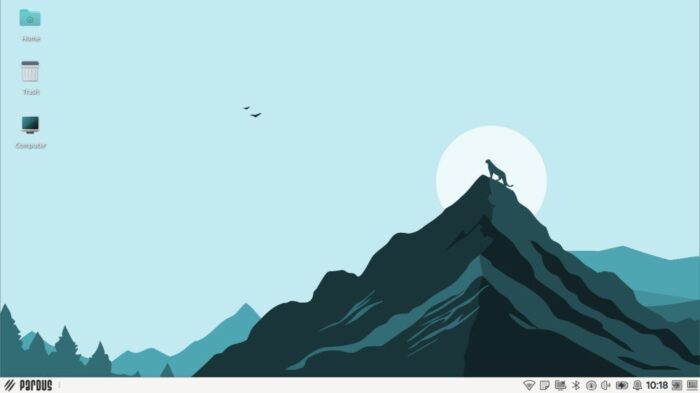
Pardus 25.0 features the Xfce desktop environment. What is it about Turkish distros? In this December review, we tried another Turkish distro – and arguably this is the “default” Turkish distro by virtue of the fact that Pardus evolved from a government-sponsored project into a community-driven distribution.
I tested the latest and greatest, Pardus 25.0 “Bilge” – with “bilge” being Turkish for “wise.” It’s based on Debian 13 Stable, with Xfce 4.20.2 as its default desktop environment. It also comes with GNOME, along with a Server edition and a Raspberry Pi version. The distro itself is named after Panthera Pardus Tulliana, the scientific designation of the Anatolian Leopard.
Pardus manages to pack in a lot of software in its default installation. Not only are there a plethora of software tools available, but it ships with both Firefox ESR — the browser’s long-term release build that gets major feature updates about once a year instead of every four months — and the Evolution e-mail client. In addition, the default installation also included popular programs such as GIMP, VLC, and LibreOffice.
Pardus 25.0 was an absolute joy to use and didn’t falter for an instant, meaning it would be suitable to use anywhere that Linux is used. Beginners should feel at home with the amount of easy-to-use apps that Pardus provides by default, and experienced users will appreciate the wealth of tools it has to offer.
Like how gravity works or the ending of the movie 2001: A Space Odyssey, one of life’s mysteries is why Pardus isn’t near the top of everybody’s list of all-time great distros. Maybe the fact that Turkey is not exactly a known FOSS hotbed is what’s keeping it from getting a wider international audience. Take it from me: Pardus is an outstanding distro which merits a look.
Final Thoughts
Again, I feel I should apologize for only picking five. There are many other worthy distros out there, some of which I hope to review next year. And despite bringing developments to the fore on a regular basis, big distros like openSUSE and Fedora were excluded because they are doing what is expected of them, and therefore need no ink… er, pixels.
With this column, that looks like a wrap for 2025. And one more thing: Happy New Year, everyone!
Do you have a distro you think would make a great feature for FOSS Force’s Distro of the Week? Don’t be shy—let us know! Offer your suggestions in the comments below (or use the “contact us” link under our masthead) and we’ll make an effort to make it so… No suggestion is too mainstream or too niche—let us know what you’d like to see!

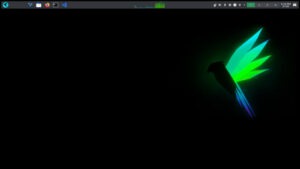


give a chance to Pardus distro