
This week, open met open. In this case, it was open source software, in the form of AlmaLinux Kitten, meeting open source hardware, in the form of the RISC-V instruction set architecture.
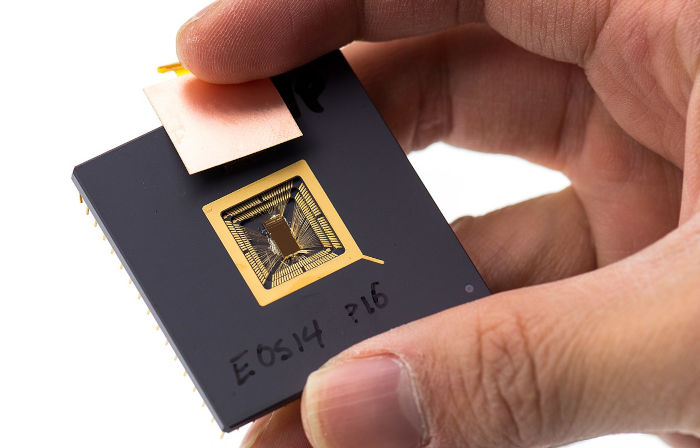
Just in time for Saint Paddy’s day, AlmaLinux announced on Tuesday that AlmaLinux OS Kitten 10 is now available for the RISC-V architecture. This is far from the first Linux distribution to support the open source instruction set architecture. Debian’s support of the ISA goes back to last decade, and Ubuntu, Fedora, and Rocky Linux also support RISC-V.
AlmaLinux 10 prime doesn’t yet support the ISA, but undoubtedly will. Kitten is AlmaLinux’s tracking of CentOS Stream, and is a testing arena for AlmaLinux, which is evidently what this inclusion is all about.
“RISC-V is an exciting and fast-moving ecosystem, and we’d love your help testing and improving AlmaLinux on this platform,” Andrew Lukoshko, AlmaLinux’s lead architect wrote in a blog post. “If you have RISC-V hardware or are running riscv64 containers or QEMU VMs, please share your experience with us.”
RISC-V’s Long Ride to Today
Eight years ago, when Naveed Sherwani was in his first year as CEO at the RISC-V design house SiFive, he told me that the open source ISA was about 10 years away from being a server-driving CPU. A year later, he dropped that to five years.
The latter would have made the target date 2024, and he didn’t miss the mark. In February 2024, European cloud provider Scaleway announced and launched a range of RISC‑V cloud servers, billed as the first public RISC‑V server instances. To be sure, these were small‑scale offerings aimed at developers and early adopters rather than mass‑market production workloads, but they were still fully functional servers.

An announcement later that year that those first small-scale moves had signaled the beginning of an era that would eventually see RISC-V silicon take a seat in the data center alongside the likes of Intel, AMD, and Arm.
The announcement was from RISC-V startup Ventana, when it launched its Veyron V2 RISC‑V server CPU design. Although the design wouldn’t be ready for prime time deployment until 2025, it did put original equipment manufacturers on notice to be on the lookout for a RISC‑V option for high‑core‑count server chips.
If You Have the Hardware…
In his blog, Lukoshko said the new silicon port targets RISC-V’s RV64GC profile and that package repositories are already publicly available, served by the AlmaLinux Mirror Service. This means that packages can be installed and updated with dnf just like on any other architecture that AlmaLinux supports.
Official Docker container images for AlmaLinux OS Kitten 10 riscv64 are also now available. From an x86_64 or aarch64 host, they can be run using QEMU user-mode emulation:
docker run -it --rm --platform linux/riscv64 almalinux:10-kitten bash

QEMU user-static and binfmt_misc must be configured on the host for cross-architecture emulation. On most systems this can be set up with:
docker run --rm --privileged tonistiigi/binfmt --install riscv64
A generic cloud VM image with cloud-init support is also available for riscv64. This image can be used with QEMU to run AlmaLinux OS Kitten 10 RISC-V virtual machines, making it easy to test and develop for the architecture without dedicated hardware.
RISC-V on AlmaLinux Prime
Even though Rocky Linux — AlmaLinux’s chief competitor in RHEL-clone space — already supports RISC-V, my guess is that AlmaLinux won’t be in a rush to push an officially supported version out the door, unless Red Hat were to jump the gun and suddenly release RISC-V version of RHEL 10. Otherwise, I suspect we won’t see an official version until the release of AlmaLinux 11. When that happens will entirely depend on Red Hat.

Christine Hall has been a journalist since 1971. In 2001, she began writing a weekly consumer computer column and started covering Linux and FOSS in 2002 after making the switch to GNU/Linux. Follow her on Twitter: @BrideOfLinux



Be First to Comment