
System76’s new Thelio Mira keeps the base specs close to Prime but leans on cooling, power headroom, and expandability to court GPU‑heavy Linux workloads.
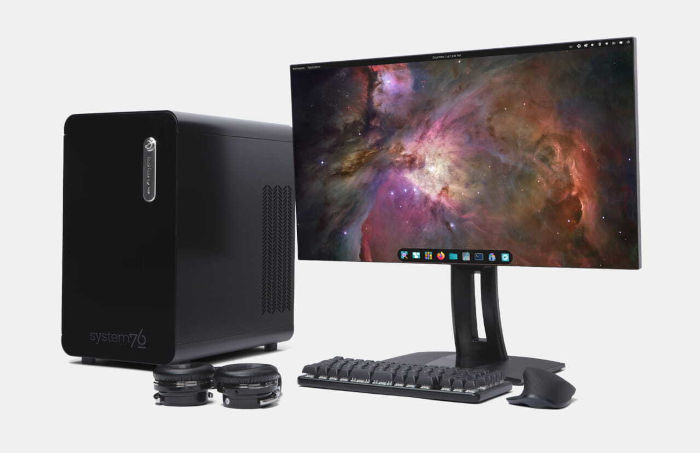
System76, the “made in the USA” computer company out of Denver that specializes in hardware pre-installed with Linux, has announced a complete redesign of Thelio Mira. It’s now positioned as the “professional” desktop sitting above Thelio Prime, topping its Thelio desktop line, just below it’s Thelio workstations.
If you’re a long time System76 user and this hierarchy seems a little wonky to you, let me explain. Gone are the days when Thelio was a line that produced three distinct versions — Thelio, Thelio Major, and Thelio Massive — mostly classified by cabinet size and how much computing horsepower could be put inside those cabinets.
These days there are two categories — desktop and workstation — with two versions of Thelio in the desktop line and three separate Thelio workstations. Prime is the lowest priced Thelio desktop (the lowest priced overall, actually), with a base price of $1,499. The baseline for Mira is $1,699, with the baseline tech specs for the two lines being so close that you might think that other than Mira’s larger case, they’re the same.
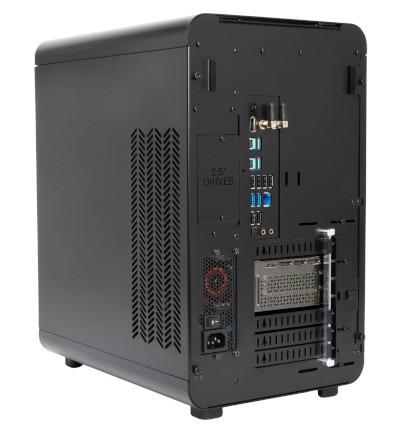
You wouldn’t be wrong if you do, but you also wouldn’t be right.
Comparing Primes and Miras
Ordered from the baseline with no upgrade, both will ship with a 5.4 GHz Ryzen 5 9600X (6 Cores – 12 Threads) processor, 16 GB DDR5 5200 MHz RAM, and 500 GB PCIe4 M.2 SSD (7,000MB/s Read, 3,900MB/s Write). For graphics, in System76 speak, Prime’s base is Integrated Graphics and Mira is AMD Radeon Graphics, so no difference there to speak of.

There are two notable differences in the baseline specs. The first is that Prime ships with a 650 watt power supply and Mira with a 750 watt unit — or a 1,000 watt unit if you order your box with RTX 5080 or 5090 GPUs. Also, there’s an option to upgrade the cooling fans on the less expensive Prime models, but not on Mira. That’s because instead of forced air, Mira uses a liquid cooling system that employs a top-mounted radiator.
That’s because System76 has seen the future, and it’s filled with GPUs that produce a lot of heat.
If I were in the market for a computer right now, and I had narrowed the choice down to a Thelio desktop, I’d spend the extra $200 and grab the Mira specifically for the liquid cooling, and the extra hardware space.
Article continues after sidebar
Sidebar: Pricing a Thelio Then & Now
When looking at System76’s “next‑gen” prices, it would be easy to assume that the $1,699 baseline price of the redesigned, liquid‑cooled Thelio Mira reflects a gigantic price hike. Actually, it might indicate a quiet price reduction.
When I bought my earlier Thelio — a Ryzen 5 3400G box with 32 GB RAM and a 500 GB NVMe “hard drive” — it started from a baseline configuration of about $1,000, but with my upgrades landed closer to $1,500, firmly in the “nice, but still attainable” Linux desktop tier.

In 2026, the bottom of the Thelio stack is the air‑cooled Thelio Prime that starts at $1,499, about what I paid for my slightly beefed‑up box five years ago. However, Prime’s default 5.4 GHz Ryzen 5 9600X delivers several times the CPU performance of my old 3400G, so despite the scary‑looking price ladder, the new entry‑level Thelio actually gives you more machine for the same money than what I got back then.
Mira by Numbers
There are three ways to order a Mira. The easiest way, perhaps, would be to opt for one of two preconfigured models — Premium and Elite — which are currently being offered at the discounted price of $4,299 and $4,799 respectively. A better way, perhaps, would be to go ala carte with Mira Custom, which starts with Mira’s baseline and let’s you add from there. If you order it fully loaded with everything, you’ll get: 16-core AMD Ryzen 9 9950X3D CPU, 192GB DDR5 RAM, 28TB of storage, Nvidia RTX 5090 graphics.
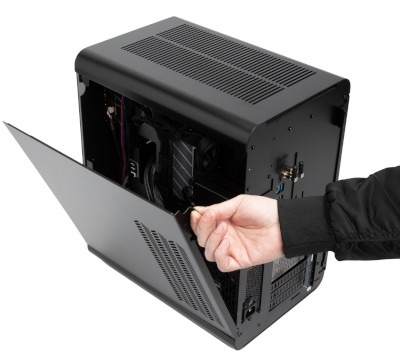
Mira’s custom case, which is manufactured in the US at System76’s Denver facilities, combines tempered glass, aluminum, and steel components, with quick-access magnetic panels and a bottom dust filter that can be removed for cleaning.
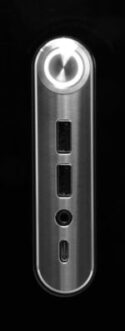
Unlike older Thelios that had ports only on the back, these next generation Thelios have ports fore and aft. On the front there is a USB 3.2 Gen 2 (Type-C) and two USB 3.2 Gen 1 (Type-A) ports, and a 3.5mm combo audio jack. The back of the machine sports 2 USB4 Type-C, 4 USB 3.2 Gen 1 (Type-A), and 6 USB 2.0 (Type-A) ports. Also on the back are audio connectors: 3.5mm line out, 3.5mm mic in, and S/PDIF digital audio out.
All System76 devices ship with your choice of Pop!_OS — the popular Linux distro the company develops in house, along with it’s scratch-built COSMIC desktop — or the latest LTS version of Ubuntu. If neither of these distros is what you want, you are perfectly free to install whatever you want without voiding your warranty.
Thelio Mira launched on Tuesday and is taking orders online now. The first of these new Miras will ship around April 15.

Christine Hall has been a journalist since 1971. In 2001, she began writing a weekly consumer computer column and started covering Linux and FOSS in 2002 after making the switch to GNU/Linux. Follow her on Twitter: @BrideOfLinux


Be First to Comment