
In a wide-ranging interview, the founder of the Free Software Movement discusses GNU, Linux, the open-source split, large language models, SaaSS, digital surveillance, and why software freedom remains a moral issue.

Richard Stallman needs no introduction, especially for an audience that reads FOSS Force. Without him, the free software movement would at the very least be much different, and the four software freedoms would possibly still be waiting for someone to give voice to them. There would also be no GPL, the first general-purpose copyleft license, written long before there was such a thing as open source. Speaking of that, without Stallman there would also likely be no open source, although I’m pretty sure that he wouldn’t see that as such a bad thing.
Our method was pretty simple. I sent a list of seven questions by email, which he answered, also by email. After that, we did a light edit for readability and style, with Stallman agreeing to all but one of the edits (the inconsequential removing of a parenthetical “LLM” after the first mention of “large language models”). During the editing process, he also made a non-editing point that is addressed at the end of the second question.
Christine Hall: The Free Software Movement you started has now been around for more than forty years. It began at a time when microprocessors and home computing were in their infancy, and very few people had hands-on experience with computers. Today, by contrast, most people’s lives are touched by computers almost constantly. Over this span of time and change, how has your approach to Free Software evolved?
Richard M. Stallman: When I announced the GNU Project in late 1983, IBM PCs and clones were widespread. Their users were not yet a majority of people, even in the US, but they were no longer unusual. Therefore, experience with nonfree software and how it restricted the user was no longer unusual. However, most users had been taught to regard being under the power of software companies as normal and legitimate, so even when this screwed them, it rarely occurred to them that things could be otherwise. Few had encountered the pre-GNU free software, so they did not know what users had lost.
However, it was rare at that time for computers to be designed and built specifically to restrict their users and owners. Rarely was there any obstacle to developing free software to do a particular job, aside from the work required to write the code, and that work we could do.

I used the convenient and reliable free software we had released to recruit more developers, and to spread the idea that users morally deserve control over how their software works and what it does.
In the 1990s, we began to encounter intentionally created obstacles to free software, such as digital restrictions management (see DefectiveByDesign.org). The companies that designed digital technology as handcuffs for the public — for instance, by making DVD players with nonfree software to decode encrypted DVDs, so they could restrict what users could do with the music or video — came into conflict with our goal of giving users control over what their computers do.
We began to campaign against intentional (and therefore malicious) restrictions imposed through nonfree software, and against their propaganda terminology, such as using the word “piracy” to refer to sharing that they disapproved of, and their legal proposals such as the Digital Millennium Copyright Act, which made it a crime to break their digital handcuffs.
Also in the 1990s, a philosophical disagreement emerged, between the Free Software Movement’s moral demand for computing freedom, and those who appreciated this freedom but insisted on defending developers’ “right” to deny freedom to their users. In 1998, the latter camp adopted the term “open source” as their brand for that apolitical stance, and promoted it with the support of companies such as IBM.

Thenceforth the Free Software Movement had to compete for mindshare with the open source rejection of our values and principles. Open source supporters developed useful software which was free, but never discussed the moral principle of control over your software, and never agreed that a nonfree program is unjust for subjugating users. Disagreeing with them, I learned to go straight to the moral level to set out our stance, and to object strenuously to labeling me or my activities with their political slogan. Whenever someone associates GNU, the GNU General Public License, or me personally with the banner of “open source,” I am obliged to protest and say that is not so.

Around 2000, malicious digital products began to become widespread, starting with DVD players and cellular phones. DVD players implemented Digital Restrictions Management to block people from copying and sharing their contents. To stop people from sharing copies is a divide-and-rule policy — an injustice.
Cellular phones contained software responsible for communicating with the phone radio network, and listening to the microphone. For the most part, the phones’ owners could not change that software at all, but other parties could use the cellular radio to install modified software without the phone owner’s consent. Sometimes the modified software was designed to listen through the mic all the time and transmit all the time. If the owner tried to shut down the phone, these modified programs would display images that resembled a real shutdown while continuing to run and transmit. (I don’t know whether they could override “airplane mode” and continue transmitting even then.)

Digital products with malicious software showed that widespread use of nonfree software would conflict with human rights at every level. Whether people knew it or not, the Free Software Movement had become an essential aspect of defending human rights in general. Nowadays, the “smart,” “connected” devices of the Internet of Malthings provide a basis for total repression for any rulers that dare to use them — and more and more governments are starting to use them. The United States is moving towards repression like that of China, though not yet as complete.
I reject “connected” snooping devices on principle. The only digital devices I have that can access the internet are my computers, and they run only free software.
CH: By the early 1990s, you had already spent years advocating free software and building GNU as the basis for a free operating system. When Torvalds’ Linux kernel matured and, in 1992, was relicensed under the GNU GPL so it could be combined with GNU to form a completely free system, how did you feel about that development at the time, and how do you look back on it now?

RMS: Around the end of 1992, I heard that Torvalds had freed Linux. I asked a friend to look at it for me and report. He told me that it had two practical drawbacks: it followed the design and interfaces of AT&T’s version of Unix (System V) rather than the superior Berkeley version, and it was nonportable (thus running only on PC clones). I decided to move ahead with the GNU HURD, which I expected would be much better, and soon.
However, HURD development ran into difficulties. For instance, our debugger — GDB — needed to be extended to handle multi-threaded programs well, and this went slowly because the GDB developers tended to focus on the Unix platforms that real users used rather than on the HURD and the Mach microkernel. By 1994 I decided we should support the development of a GNU/Linux variant that would follow our ethical principles. So I had the FSF fund development of Debian GNU/Linux.
Developing the GNU HURD continued to be slow, and a few years later Linux had become very successful. So we deprioritized the HURD and stopped paying staff to work on it. However, volunteers are making progress on it again.
[During the editing process that followed the interview, Stallman brought up an issue he had with the wording of the phrase “building GNU as the basis for a free operating system.”
“I just noticed a subtle confusion in that sentence,” he wrote. “GNU was not intended to be a mere “basis” — it was intended to be a free operating system. However, other people started developing free software, including the kernel Linux, so that the free system that finally came to be included free software by various other developers.”]
CH: Let’s fast‑forward to 1998, when Bruce Perens and others introduced the Open Source Definition, based on the Debian Free Software Guidelines, which in turn were influenced by the free software principles you had been advocating for years. Some people assumed you would welcome this as a major victory for your cause, but you were not enthusiastic about the “open source” rebranding. How did you view that development at the time, and how do you see it now?
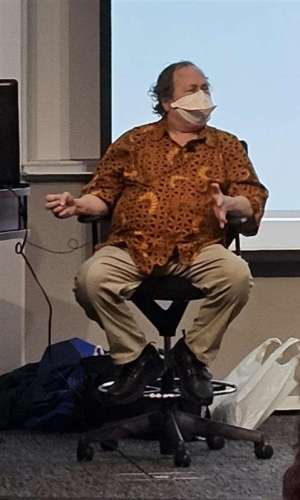
RMS: Eric Raymond phoned me to tell me about their new term, and asked me to start using it. I had misgivings about it, which I could not immediately state clearly, so I told him I would think about it.
Thinking about the material he had sent me, I realized that they planned to change the substance and focus of the idea, not just the name — to downplay the idea of freedom, not just the misinterpretable word “free.” Instead of making our moral focus clearer, they would sweep it away.
With PR support from large companies, they could drive the idea that users deserve to control their own computing entirely out of our community and our work. To preserve this goal, we would have to focus on the goal — to emphasize it even more than before.
The next day I told him we would continue to speak of free software and freedom.

CH: I think that even in the early 2000s, most people coming to both free software and open source understood the distinction between the two. I’m not so sure that’s true for today’s generation of users, especially those coming from the open source side. Do you think that’s a fair assessment, and why?
RMS: In my experience, most people have heard only of “open source” and believe that I am a supporter of it because they have seen that error in numerous publications. Only a minority know the term “free software” and know what that means. This was true in the early 2000s and it is still true.
To draw their attention to the free software issue, I say bluntly that I do not advocate “open source” at all, and never did. Then I summarize what free software means, and refer them to my article Why Open Source Misses the Point of Free Software to explain the difference, along with the definition of free software and arguments for it in the article Free Software Is Even More Important Now.
When dealing with an issue of essential human rights, we must present them firmly as such. Even more so for human rights not yet generally recognized as essential. If we grant the economic interests of big businesses a seat at the table, they will devour the whole table.
The fraction of people who write to me who state their support for software freedom as a principle seems to be increasing now. I hope that the prominent mainstream use of nonfree software to systematically mistreat users, evil though it is, is helping people to recognize the evil of nonfree software.
CH: One of the things that’s often noted at open source events is that open source, which seemed like a young person’s game when it was getting off the ground, is now visibly graying, with fewer young people coming into the fold. Are you noticing the same trend in free software? If so, why do you think that’s happening, and what, if anything, can be done to turn it around?
RMS: I see that the established communities and development groups are having trouble attracting new members. However, I meet young people, and receive email from young people, who are drawn by the philosophy of free software and want to reject nonfree software entirely. Now that social activities and schools have been co-opted by Big Tech and impose its nonfree software and online dis-services, they face intense pressure to surrender to Big Tech. I refer them to Wojciech Kosior’s article on How I Fought To Graduate Without Using Nonfree Software.
CH: You mentioned during your recent appearance at Georgia Tech that, as far as you could tell, none of the current AI models are truly open. Many people on the open source side have been wondering whether genuinely free or open AI systems are even possible. What do you think — and if they aren’t, what does that mean for the future of free software?
RMS: I am sure I did not call them “AI,” and I am sure I was not interested in whether they are “open.”
I have to address this by criticizing that terminology. The term “artificial intelligence” is the basis of a marketing hype campaign. I define “intelligence” as the ability to know or understand, at least within some domain. Such software does exist, for limited domains. However, when people talk about “using AI,” they are generally referring to large language models. Those have no intelligence. They play with arranging words into text, but they do not understand the meaning of their textual inputs, nor the meaning of their textual responses.
The reason LLMs so often generate text whose meaning refers to false supposed facts is that they never really understand the text; they don’t work with meanings or facts in the domain of discussion. The terms they merit are “pretend intelligence” and “bullshit generators.”
To avoid being lured into supporting the marketing hype based on “AI,” please join me in reserving the word “intelligence” for systems that qualify for it.
I surely didn’t say anything about whether LLMs are “open,” because, as I’ve explained, I do not advocate making software “open” or “open source.” Those terms are depoliticized substitutes for “free” and “libre,” and were coined to win the support of businesses by avoiding the issues of freedom and justice (for the users of software) that might lead to criticizing businesses on moral grounds. Since those are the crucial issues in my view, the question I always ask about a program is whether it is free or libre.
The LLMs that people mostly hear about are not released as free software. In fact, mostly they are not released at all: copies are not available. They can be used only as “online services” — meaning that the program a user directs a question to is running on some company’s computer, and under the developer’s total control. Even to modify it by patching the binary is impossible.
Entrusting your own computing activity to software running on someone else’s server inherently subjugates you, because you can’t possibly modify that copy — even if it is a copy of a free program. We call that scenario SaaSS, for “Service as a Software Substitute” and we reject it.
Since January I’ve heard of one LLM which seems to be released with freedom, including the training inputs. If that checks out, we would describe it as “free.”
Alas, that doesn’t make it “intelligence.”
CH: How can the free software movement combat the continued spread of SaaS and “service as a software substitute,” where users have no real possibility of exercising the four software freedoms? And how can it resist the growing pressure from employers and governments that effectively force people to use nonfree software in order to work, study, or interact with public services?
RMS: When companies decide to offer SaaSS, we can’t stop them. When users decide to use SaaSS dis-services, we can’t stop them. But we can explain to them how this opens them up to various sorts of exploitation, manipulation, and possibly even persecution, and then set an example of refusing.
I never run nonfree software, so when businesses and government agencies push me to run some — whether snoop-phone apps, or nonfree JavaScript code sent by websites — I simply don’t use that method. So far, I have found that with government agencies in the US there is always a way to do things by letter or by phone.
The only things I have paid for with bank cards in the past 15 years are airline tickets, and I concede that only because of the government requirement to show official identification to board the flight.
Surveillance is dangerous to everyone. In the US today, anyone may be bullied by officials at any time, and the government collects massive amounts of personal data, including location tracking. I resist this in many ways. I do not carry a mobile phone, since they track users’ movements and listen to their conversations. I do not buy products with bank cards or digital systems; I buy with cash, anonymously.
I have never ordered anything over the internet, but I have friends who are willing to order something on my behalf occasionally — under their names and shipped to their addresses — and later they give me the purchase and I reimburse the cost. They order things for themselves several times a week, so the occasional favor for me does not much reduce what remains of their privacy.
Utility bills are based on accounts for which I had to give my name. Since I can’t be anonymous with them, I pay them by mailing checks. That does not reveal anything about me except how much I paid.
I am very concerned about age verification requirements for anything digital, because all the systems that web sites try to use to verify a user’s age demand data that are sufficient to identify the user.
Let’s contrast this with traditional systems of age verification to see how much worse this is. When you buy alcoholic beverages, a store clerk will ask to see your ID, but won’t record your identity, only take note of your age. That practice respects your privacy; its surveillance impact is null. But digital age verification systems record who you are, and precisely everything you do.
At 73 years old, I am sure all the sites that do age verification would rule I am old enough. But doing the age verification would give them my name or an ID number, and I refuse to give them that.
Because of my age, I am entitled to a discount card for the Boston trains and buses. But the card would record my identity every time I board a subway train or bus. I would rather pay full fare than submit to that.
I don’t own a car, or want to, but we need to stop cars from reporting where people go. I hope to find a mechanic who will work out how to convert connected cars into “disconnected cars.” I think it could be done by wrapping some sort of metal sheets around the antennas that transmit privacy-violating data, or receive GPS. Or perhaps just unscrewing them. To do navigation, use a stand-alone GPS receiver that isn’t connected to the car’s surveillance system.
One of the dangers of tech companies storing your personal data — and personal data about you — in their servers is that agents of repression can get that data from the company without even informing you.
For more about digital surveillance, see
https://gnu.org/philosophy/surveillance-vs-democracy.html.
Afterword
It should surprise absolutely no one that more than a quarter of the way through the current century, Stallman remains as much an advocate for free software and software freedom as he was during the last couple of decades of the previous one. Tacked at the end of the email he sent with his answers to my questions was a brief list of free software related URLs that I took to be a boilerplate addition, until I sent him the first edit of the interview.
“Why did you omit all this?” he asked. “These are ways to help our cause.”
This was a big oops on my part, and a better afterward to this interview than anything I could devise:
If you are interested in helping the free software movement, here are some suggestions:
- Subscribe to the Free Software Foundation’s mailing list at fsf.org.
- Join the FSF at fsf.org.
- Do volunteer work for the GNU Project — see gnu.org/help.

Christine Hall has been a journalist since 1971. In 2001, she began writing a weekly consumer computer column and started covering Linux and FOSS in 2002 after making the switch to GNU/Linux. Follow her on Twitter: @BrideOfLinux


There’s a claim Richard makes there, that needs substantiating. The paragraph beginning “Also in the 1990s” declares that people other than himself and the FSF “insisted on defending developers’ “right” to deny freedom to their users.” As far as I can tell, that is referring to the so-called “permissive” licenses. However, prior to that, and for all this time both Richard and the FSF have accepted such licenses as part of the software freedom mechanisms. Certainly Richard and the FSF have often expressed a preference for copyleft licenses but I can’t see how their acceptance of permissive licenses is any different to that of the OSI. And over all these years I can’t think of any time where I saw the OSI express a preference for use of permissive licenses. Have I missed something somewhere along the line? Sure, the OSI was created with the explicit purpose of promoting software freedom as both a concept and a practice to the business world – and part of that was telling them all the bits they’d like and letting them work out the other bits for themselves.
The other oddity is that Richard still thinks that the word “free” is “misinterpretable”. For as long as I’ve been following this topic (since reading of the announcement of the GNU project) the English word “free” has been clearly problematic. To the vast majority of people outside of software, “free” mostly means zero cost. Hence so many quotations in those days of the adage “free as in speech” (despite that itself relying on a distinctly American constitutional sense that often doesn’t translate elsewhere). Frankly, “Open Source” has had the same problem with the word “open” – being predated re software by use in the name of The Open Group consortium a year earlier than the declaration of the Open Source Definition. The failure of software freedom proponents to come up with and use an unambiguous and catchy term is shared by all. Just because Richard knows that when he says “free” he means freedom does not make the word misinterpretable anywhere else.
p.s. personally I try to always say “software freedom” in my writing but accept that it’s not as catchy.
@gerald I agree with your comment about the word “free”. When I first went to Brazil to talk about “Free Software” I was told by a group of university students “Oh Mr. maddog, ALL of our software is free!” This was because (at that time) about 85% of the desktop software in Brazil was pirated (this from studies by the Business Software Alliance). Many times this led to a discussion about how software piracy hurts ALL software, both reducing the revenues from licenses sold and reducing the arguments around using software using the “Restrictive” licenses of OSI.
Yep, this is classic RMS. It was because of his refusal to subject himself or others to a lack of digital freedom that I left the chains of Microsoft back in 2003.
To Gerald’s addressing of the “permissive license” issue, I agree that this appears to be what RMS is referring to. To be clear, he always has referred non-copyleft free-software licenses (e. g. the various BSD licenses) as such, free software licenses. He *prefers* copyleft, of course, for the reasons he’s been stating for decades now.
I thank RMS pretty much every time I use any of my computers. All of them run Free Software-licensed operating environments.
He doesn’t care for GNU/Linux distros like Ubuntu or Linux Mint. OK, I get why, and he’s got a point. However, getting a Microsoft Windows or Apple MacOS user to, say, Ubuntu (or Mint) is nonetheless a major step forward. RMS himself used UNIX to write GNU, so there’s precedence for this notion. If I can get someone the majority of the way there, I’ll take that victory every time.