Press "Enter" to skip to content

Posts tagged as “Linux”

Deep in the Heart of Texas Linux Fest 2015

While the rest of FOSS Nation oooohs and ahhhhs with all the developments currently coming out of LinuxCon in Seattle, the end of the week’s attention — and attendance — shifts to San Marcos, Texas.

San Marcos is an exciting, historic community in the heart of Central Texas midway between Austin and San Antonio. It is home to Texas State University (the alma mater of Lyndon Johnson), and — as the Chamber of Commerce likes to boast — home of the famous San Marcos outlet malls, the largest in the Southwest.

Texas Linux Fest LogoThis year, San Marcos is home to Texas Linux Fest 2015, which is being held Friday and Saturday of this week at the San Marcos Conference Center.

Good News, Bad News for Canonical & More…

FOSS Week in Review

It’s been a busy week on the Isle of Man, and elsewhere, so let’s not tarry and dive in, shall we?

Canonical Opens Ubuntu One: After dropping its Ubuntu One cloud storage service a year ago, Ars Techinca reports Canonical this week released the system’s file-syncing code under the Affero General Public License Version 3.

Ubuntu One logo“The code we’re releasing is the server side of what desktop clients connected to when syncing local or remote changes,” said Martin Albisetti, Canonical’s Director of Online Services, in a post on the Ubuntu site. “This is code where most of the innovation and hard work went throughout the years, where we faced most of the scaling challenges and the basis on which other components were built upon.”

Larry Cafiero

Larry Cafiero is a journalist and a Free/Open Source Software advocate and is involved in several FOSS projects. Follow him on Twitter: @lcafiero

Making the Switch to Open Source Gaming

There was a time years ago when Linux and gaming weren’t fit to be in the same sentence. I first made the jump to Linux around the late ’90s with a copy of Doom II. There were glitches at times: the occasional crash, loss of sound and lack of some features. The flaws of the Linux version in contrast to its Windows counterpart turned me away from Linux gaming at first.

Mugen
Homer Simpson fighting Giga Bowser, illustrating one of the many ways the game can be customized.
It wasn’t until around 2002 that I discovered M.U.G.E.N, created by Elecbyte, which was one of the most successful games for open source platforms available. A freeware 2D fighter game, with free customization for fans of all kinds, M.U.G.E.N was my first taste of gaming on open source, and it made me a believer of the future of open source. It was also very user friendly for those with a minimum of tech skills: If there were any issues in how a character behaved or performance slowed due to an error, a quick search was all that was needed.

Hunter Banks

Hunter Banks has been a part of the Southern California Linux Expo (SCALE) Family for the past 13 years. When not writing about open source gaming, he’s working on creating his own games. Follow him on Twitter @SilvrChariot

Confusing Treasure for Junk in Linuxland

Growing up in a rural farm and ranch environment, life was a bit different for us kids. Attending school outside the rural lifestyle was nothing if not uncomfortable. Often times, it was close to humiliating. We wore Levi 501s before it was cool to wear Levi 501s. They were considered “farmer pants” or “idiot jeans.” That reference was a jab at those who needed to button their pants because zippers were too complex to figure out. When we were old enough, we would drive our old pickup trucks to school. Everyone else was driving sleek or stylish cars. More than one farmer’s kid was suspended for dental displacement to someone who decided to make fun of their vehicle or choice of attire.

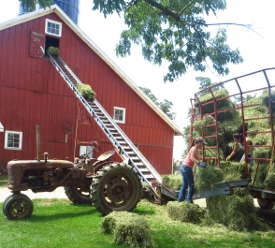
Loading hay
Photo courtesy Rootstock Corp.
But we knew those who made such remarks wouldn’t last ten minutes in our boots. Shoveling hay to feed livestock from the back of a slow moving pickup truck was tough. Doing so when it was twelve degrees was the norm for us. Breaking the ice in our stock tanks so the cattle could water was treacherous, to say the least, but most times a stick of well-placed dynamite was a better solution than walking onto the ice.

Ken Starks

Ken Starks is the founder of the Helios Project and Reglue, which for 20 years provided refurbished older computers running Linux to disadvantaged school kids, as well as providing digital help for senior citizens, in the Austin, Texas area. He was a columnist for FOSS Force from 2013-2016, and remains part of our family. Follow him on Twitter: @Reglue

Deb Nicholson Talks (What Else?) Software Patents

The FOSS Force Interview

Back in June I had the opportunity to meet Deb Nicholson, a person who is well known to people who frequent open source and Linux conferences.

I was dog tired, having had only about four hours sleep. I’d gotten up at about five in the morning, much earlier than I think is civilized, in order to make it to Charlotte in time for the opening ceremonies at the SouthEast LinuxFest (SELF). I’d allowed for traffic jams in the morning rush hour traffic that didn’t happen and so arrived early enough to have time to try to catch a nap on an inviting and empty couch I found in the vendor hallway that turned out to be part of the booth space for Internet Systems Consortium.

Deb Nicholson
Deb Nicholson
Luckily for me, Chuck Aurora, who had driven up from Mississippi with his family to maintain the booth and try to grab a few contacts, was generous when he arrived with his teenage daughter in tow, and wasn’t perturbed that I’d mistaken his booth for a public rest area. I didn’t need to get up and find someplace else to sleep, he said, exhibiting the southern hospitality I’d been told to expect at SELF. I was free to go ahead and nap if I could.

Christine Hall

Christine Hall has been a journalist since 1971. In 2001, she began writing a weekly consumer computer column and started covering Linux and FOSS in 2002 after making the switch to GNU/Linux. Follow her on Twitter: @BrideOfLinux
LibreOffice Hits Prime Time, Bug Bites KDE Plasma 5 & More…

FOSS Week in Review

LibreOffice 5 Ready for Prime Time: LibreOffice, the office suite of choice of yours truly and others in the FOSS field, is now in the starting blocks to take on the proprietary office suites. The Document Foundation announced this week the release of LibreOffice 5.0, with a significantly improved user interface, with a better management of the screen space and a cleaner look. In addition, the latest LO release offers better interoperability with proprietary office suites such as Microsoft Office and Apple iWork, with new and improved filters to handle non standard formats.

libreofficsplash-300x85“In 2010, we inherited a rather old source code, which had to be made cleaner, leaner and smarter before we could reasonably develop the office suite we were envisioning for the long term,” said Michael Meeks, a director at TDF and a leading LibreOffice developer. “Since 2010, we have gone through three different development cycles: the 3.x family, to clean the code from legacy stuff; the 4.x family, to make the suite more responsive; and the 5.x family, to make it smarter, also in terms of user interface.”

Larry Cafiero

Larry Cafiero is a journalist and a Free/Open Source Software advocate and is involved in several FOSS projects. Follow him on Twitter: @lcafiero

Putting Lipstick on a Penguin

There was a time, and it’s been a while back, when I believed my mission in life was to mount my open source horse and endorse Linux without remorse far and wide.

“Linux is coming, Linux is coming!”

One if by torrent, two if by…uh, download link.

While it’s true that I was a shameless shill for a particular distro during that period, it was the message that was important. Linux will change your oil. Linux will change your baby’s diapers. Linux will change your life.

TuxAnd while using Linux may well change your life, I may have ever-so-slightly exaggerated the amount and impact of that change. Maybe just a little bit. Maybe.


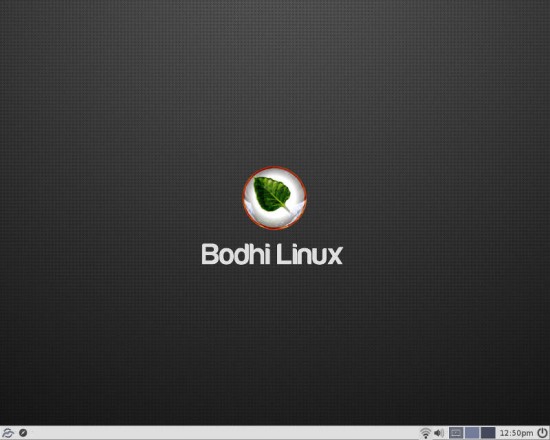
It was then I explored ways to present Linux to the new user, and to do so in a way that did not cause system shock. I decided to make each new Linux installation look as much like Windows as possible. My partner Diane did fairly well when I told her we would become a one operating system household. She wasn’t weaned…she was herded into the world of Linux. I had cleaned the last virus from her computer.

Ken Starks

Ken Starks is the founder of the Helios Project and Reglue, which for 20 years provided refurbished older computers running Linux to disadvantaged school kids, as well as providing digital help for senior citizens, in the Austin, Texas area. He was a columnist for FOSS Force from 2013-2016, and remains part of our family. Follow him on Twitter: @Reglue

Banks’ Family Values; Texas Linux Fest & More…

FOSS Week in Review

It’s been pretty warm where I live on the Central California coast, and I hope everyone else has been keeping cool — or as cool as possible — this week. After OSCON, there’s been sort of a lull in news that’s uniquely FOSS-related, but we do have a couple of tidbits to throw you as we end the week.

Keila Banks
Keila Banks, fresh off her OSCON keynote, appears Saturday on MSNBC (Photo: OSCON video)
All in the Family: It seems that the Banks family of Los Angeles has taken upon itself to single-handedly invite the wider world to the see and try out the benefits of FOSS and programming. We reported on Keila Banks speaking at OSCON last week, but so has Business Insider and MTV News — and now MSNBC is getting in on the act by having her on Melissa Harris-Perry’s show at 8 a.m. Saturday. Check your local listings.

Larry Cafiero

Larry Cafiero is a journalist and a Free/Open Source Software advocate and is involved in several FOSS projects. Follow him on Twitter: @lcafiero

KDE Plasma Goes Mobile

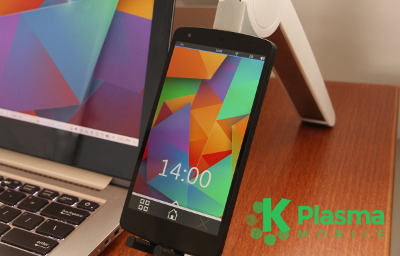
While FOSS Force gave you a look at setting up KDE Plasma on the desktop in Don Parris’ article last week, KDE recently jumped into the mobile fray by announcing KDE Plasma Mobile at their Akademy conference this week in Spain.

While it joins an already crowded field, with the likes of Android, Ubuntu Touch, Firefox OS and others already in the mobile OS space, Plasma Mobile “offers a free — as in freedom and beer — user-friendly, privacy-enabling, customizable platform for mobile devices,” wrote Sebastian Kugler, a lead architect, on KDE’s website. “Plasma Mobile is currently under development with a prototype available providing basic functions to run on a smartphone.”

Larry Cafiero

Larry Cafiero is a journalist and a Free/Open Source Software advocate and is involved in several FOSS projects. Follow him on Twitter: @lcafiero

The Elderly & the Scam Masters

It always happens to someone else. Right? I mean, what are the chances it will happen to me? Or you? Be it winning the lottery or developing a debilitating disease. We all know someone who knows someone who…well, you know how it goes. It will happen to someone else.

And it did, two days ago. Across the street from me.

scammerClaude and Jane are good folks. Both in their mid 70s. They live on their combined retirement funds and spend their time keeping busy with kids, grandkids, and from what I hear, a great-grandchild in a matter of months. They come over for coffee or tea at times, and we always see them at community center events. They are not well off by any standard, but they do okay…until last Saturday.

Ken Starks

Ken Starks is the founder of the Helios Project and Reglue, which for 20 years provided refurbished older computers running Linux to disadvantaged school kids, as well as providing digital help for senior citizens, in the Austin, Texas area. He was a columnist for FOSS Force from 2013-2016, and remains part of our family. Follow him on Twitter: @Reglue