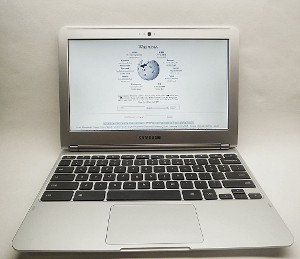
Inquiring minds want to know: What Linux distro is on your computer?
**If you’re finding this article useful, please consider helping us reach our absolute minimum daily goal of $31 today so our FOSS Force Independence 2026 fundraiser stays on track for April. Any amount helps.**
Market share matters, even in the nonprofit world in which most distros live. Most likely, a large user base means more dollars coming in from donations or corporate grants. Also, a popular and much used distro might also prompt more folks with technical skills to volunteer, which might result in an improved user experience — or not. You know what they say about too many cooks in the pot.
After two years of development, the stable version of the latest and greatest version of Bodhi Linux, 3.0.0, was released last month. There’s little doubt that loyal users breathed a sigh of relief with the release, as there had been some question about whether the distro would continue after project founder Jeff Hoogland briefly resigned in September, saying he no longer had the time required by his duties to the project. The good news was that he continued to work with the development team, and in January returned in his old role as lead developer. The long awaited new Bodhi was released less than a month later.
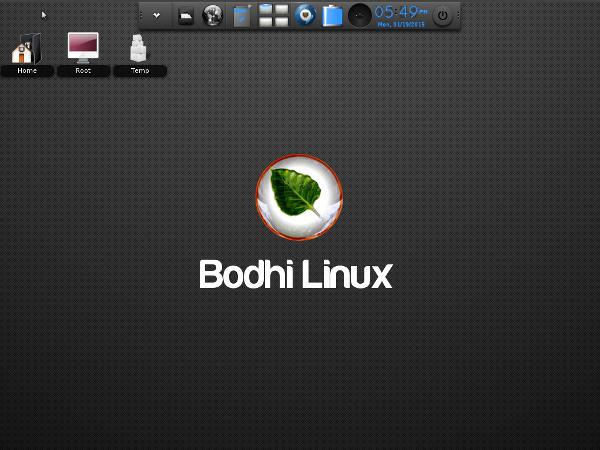
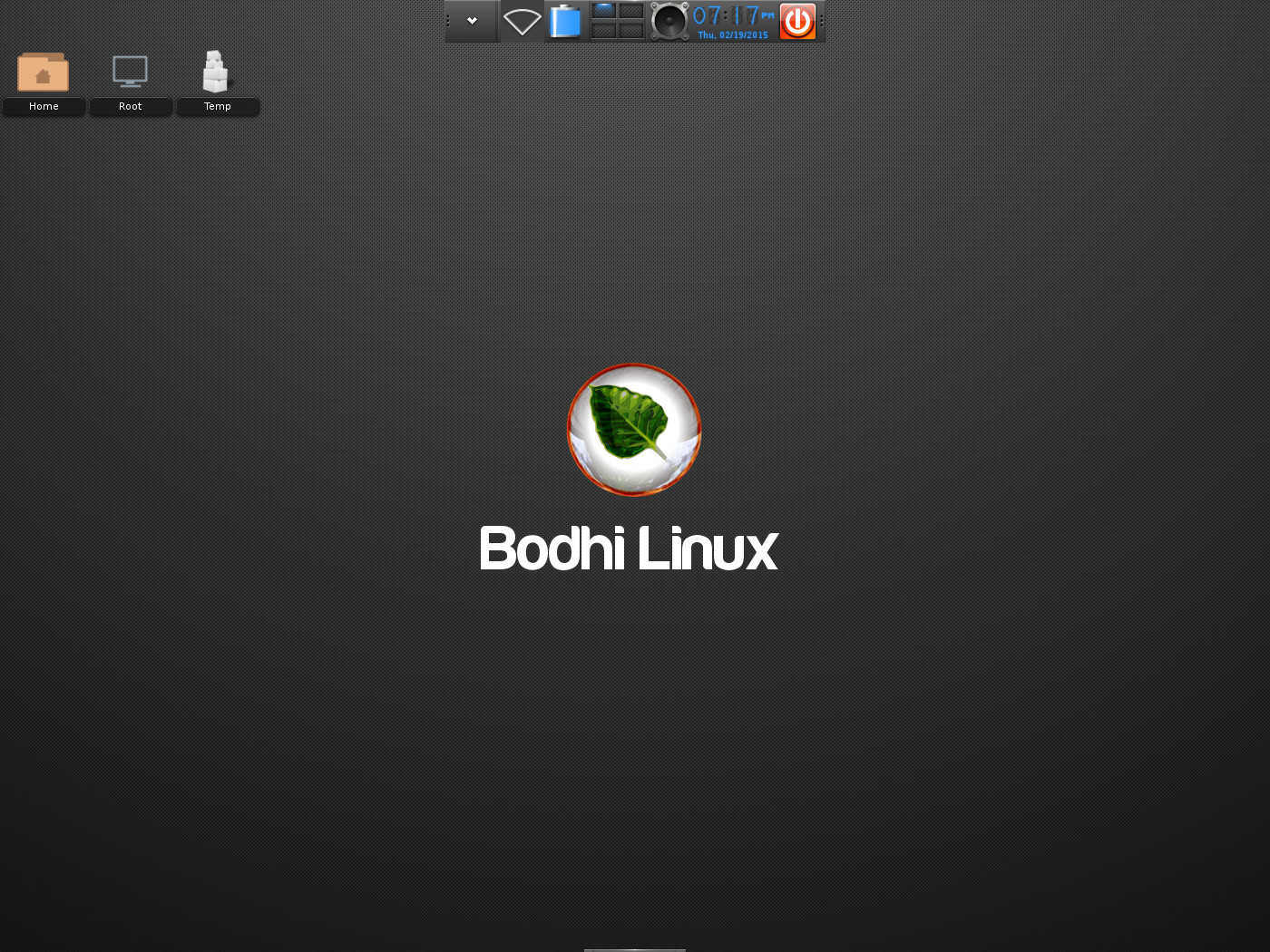
Click to enlargeLike many distros these days, Bodhi is built on top of a Ubuntu base, in this case using version 14.04 LTS as its core. However, Bodhi is anything but just another cookie cutter distro. From it’s inception back in 2010, the main purpose of the project has been to offer a Linux distribution that fully takes advantage of the lightweight but full featured and elegantly beautiful Enlightenment desktop environment. Beyond that, the Bodhi development team embraces a philosophy of minimalism — but not a forced minimalism which forces users into a confining or even crippling environment. A default installation of the distro is very bare bones, a base on which the user can build a system suited for his or her individual needs.
**If you’re finding this article useful, please consider helping us reach our absolute minimum daily goal of $31 today so our FOSS Force Independence 2026 fundraiser stays on track for April. Any amount helps.**
According to Hoogland, the new version of Bodhi is being well received, both by old users updating their systems and by new users giving the operating system a try for the first time.
Christine Hall has been a journalist since 1971. In 2001, she began writing a weekly consumer computer column and started covering Linux and FOSS in 2002 after making the switch to GNU/Linux. Follow her on Twitter: @BrideOfLinux
As the week finally becomes Friday, here are a few things that deserve mentioning in the FOSS realm:
Bodhi Chromebook Giveaway: What’s better than having a Chromebook? Having a Chromebook with Bodhi installed on it, of course. We’ll let Jeff Hoogland explain:
“Whenever I am done working with development hardware I picked up for Bodhi Linux, instead of letting it rot in the corner of my basement I would prefer to give it back to our users,” Hoogland writes in a post on the Bodhi website describing the giveaway. “Last year we gave away an ARM powered Samsung Chromebook and this year I find myself with a spare Acer C720 Chromebook after recently upgrading to the i3 based version.”
**If you’re finding this article useful, please consider helping us meet our absolute minimum daily goal of $31 so our FOSS Force Independence 2026 fundraiser stays on track for the month of April.**
So on May 15, some lucky Bodhi contributor — key word here is “Bodhi contributor” — will receive “a gently used Acer C720 Chromebook powered by Bodhi Linux.”
Says Jeff: “If you have already donated or contributed to the Bodhi project in 2015 no extra effort is needed on your part. If you have been thinking about getting involved or sending a donation our way now is a fantastic time to do as you might end up getting something back!”
There’s a new player in the preinstalled Linux world offering computers with Ubuntu preinstalled for $89, and although this price might suggest bottom of the line specs, the machines are more than powerful enough for most users. They’re also green — very green. They weigh in at 50% less than the average desktop, meaning they use less fossil fuel to ship, and are built in a case made of 100 percent recycled ABS plastic. They’re also shipped in packages completely made from non-virgin fiber.
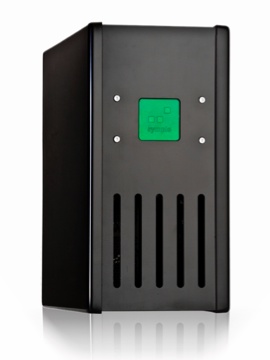
Front view of the Symple PC Workstation.Everything inside the box is also green — or as green as possible, considering that modern electronics is nothing if not a toxic stew.
**If you’re finding this article useful, please consider helping us reach our absolute minimum daily goal of $31 today so our FOSS Force Independence 2026 fundraiser stays on track for April. Any amount helps.**
They come from a company out of Phoenix called Symple PC, founded by Jason Spisak, who also was the co-founder and marketing director of the once popular Linux distro Lycoris, which made news back in 2003 when Walmart offered the distro preinstalled on $199 PCs. He’s now reinventing how we recycle still usable electronics by going far beyond the mere refurbishing of old boxes.
Christine Hall has been a journalist since 1971. In 2001, she began writing a weekly consumer computer column and started covering Linux and FOSS in 2002 after making the switch to GNU/Linux. Follow her on Twitter: @BrideOfLinux
There are many reasons why people use Bodhi Linux. Some use it because they really like the Enlightenment desktop, and Bodhi has pioneered the integration of Enlightenment to create a distro that is both beautiful, elegant and functional. Others use it because they want an operating system that stays out of their way, and although Enlightenment offers plenty of whistles and bells for those who need or want them, it can also be configured to be highly minimalist and use a very small amount of system resources.
**If you’re finding this article useful, please consider helping us meet our absolute minimum daily goal of $31 so our FOSS Force Independence 2026 fundraiser stays on track for the month of April.**
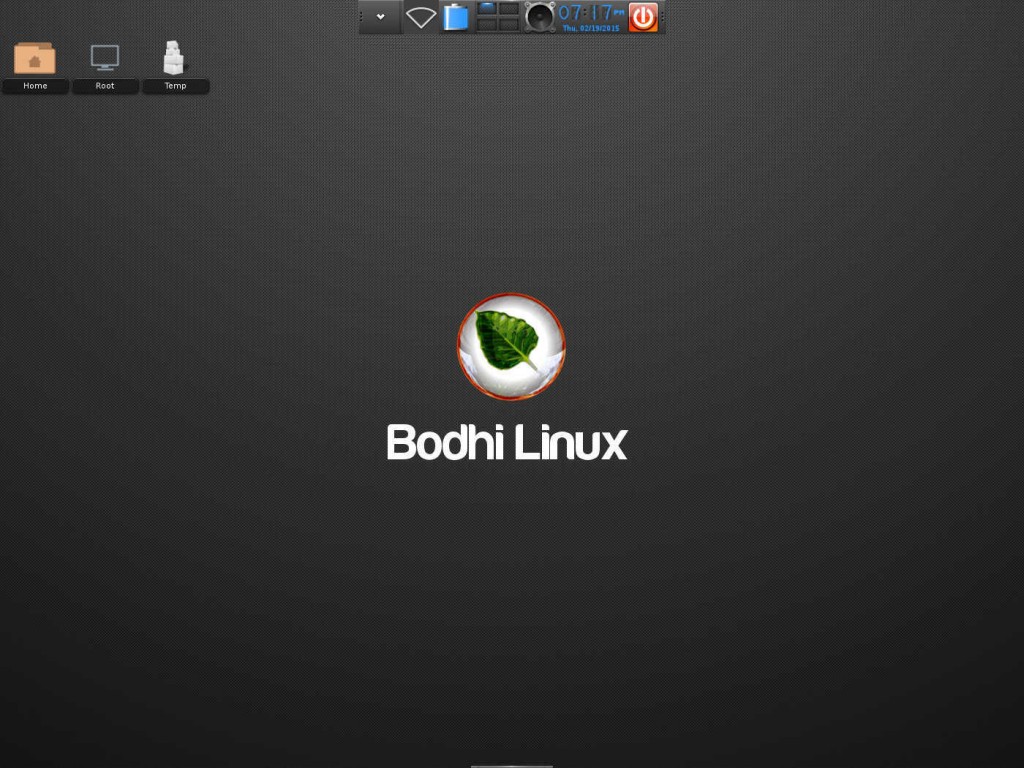
Out-of-the box and freshly installed Bodhi 3.0.0 Legacy edition. Click to enlargeBecause of this, Bodhi can also be a good choice for people using older hardware, especially for those who might want to run some “heavier” programs than many made-for-old-hardware distros allow. With this in mind, Bodhi now offers a special “Legacy” edition, developed especially for older hardware. The 3.0.0 Legacy ISO, which can be downloaded from the Bodhi website, features the 3.2 kernel and works on 486 or newer machines, including non-PAE hardware. It also uses Enlightenment’s E17 desktop instead of the E19 version which is on all other 3.0.0 Bodhi releases.
Christine Hall has been a journalist since 1971. In 2001, she began writing a weekly consumer computer column and started covering Linux and FOSS in 2002 after making the switch to GNU/Linux. Follow her on Twitter: @BrideOfLinux
Larry’s at SCALE 13x, covering the event for us while fulfilling his duties as the conference’s publicity chair, so he twisted my arm to again take care of the week’s news review. Well, he didn’t really twist my arm; he asked politely. And promised to give me some piece of conference swag he has no use for. Can’t wait to see what it is.
New Xfce due next week
**If you’re finding this article useful, please consider helping us reach our absolute minimum daily goal of $31 today so our FOSS Force Independence 2026 fundraiser stays on track for April. Any amount helps.**
Speaking of Larry, back in December he helped quash a rumor that the popular Xfce desktop had been abandoned. Now we have further evidence that he wasn’t just talking through his hat — as if there was ever any doubt.
Today the folks at Softpedia announced that Xfce 4.12 will be released by the end of February, or most likely on March 1st:
Christine Hall has been a journalist since 1971. In 2001, she began writing a weekly consumer computer column and started covering Linux and FOSS in 2002 after making the switch to GNU/Linux. Follow her on Twitter: @BrideOfLinux
Paul Harvey — he was a radio commentator in decades past, kids (check him out on Wikipedia) — used to end many of his radio broadcasts with, “. . . so now, you know the rest of the story.”
**If you’re finding this article useful, please consider helping us meet our absolute minimum daily goal of $31 so our FOSS Force Independence 2026 fundraiser stays on track for the month of April.**
Here’s the rest of the story regarding successors, spins or forks of CrunchBang. The tech media is falling over itself reporting that the “successor” to CrunchBang is something called #!++ which, to many CrunchBang insiders, is nothing more than one — but not “the resurrection” — project based on CrunchBang. It’s a project that appears, in the opinion of many CrunchBang contributors, as one that is trying to capitalize on the name, now that it’s “available,” in a manner of speaking.
The problem was, it wasn’t just me who suffered. It was dozens of people in my organization, and had this happened a month later than it did, it could have been hundreds.
We’ve had some fairly high profile Linux distros fold up their tents and move along. Whether due to a lack of financial support or the project growing larger than a one man dev team can manage, distros do go away. It’s never for a good reason but the fact remains: When a distro ceases to exist, a lot of people get left in the lurch.
**If you’re finding this article useful, please consider helping us reach our absolute minimum daily goal of $31 today so our FOSS Force Independence 2026 fundraiser stays on track for April. Any amount helps.**
Most recently, it was CrunchBang which rang the bell. I could feel the conflict and sadness in lead developer Philip Newborough’s statement. He didn’t want to do this, but for his own reasons he did. But what struck me in the middle of my being was his statement:
“As for me, while I’m deeply sad to let go of a project that in many ways has defined my existence for many years.”
Ken Starks is the founder of the Helios Project and Reglue, which for 20 years provided refurbished older computers running Linux to disadvantaged school kids, as well as providing digital help for senior citizens, in the Austin, Texas area. He was a columnist for FOSS Force from 2013-2016, and remains part of our family. Follow him on Twitter: @Reglue
There’s been a lot of interesting Linux news of late. Not just GNU/Linux, but all types of Linux, Android, Chrome OS, Firefox OS, embedded (IoT), cloud computing, cars, TVs, just about anything you can think of. But truth be told, I’d like to see more Linux on the desktop — just as Linus Torvalds said he would like to see.
**If you’re finding this article useful, please consider helping us meet our absolute minimum daily goal of $31 so our FOSS Force Independence 2026 fundraiser stays on track for the month of April.**
The recent purchase of a Chromebook for my son got me thinking about a new opportunity for Linux on the desktop. This is not an idea for getting a standard GNU/Linux desktop to automagically replace all existing Windows desktops, but to leverage the cloud computing paradigm with a bulked-up Chromebook-like system that would be workable for 80 to 90 percent of personal, school, and business needs.




 So on May 15, some lucky Bodhi contributor — key word here is “Bodhi contributor” — will receive “a gently used Acer C720 Chromebook powered by Bodhi Linux.”



 Most recently, it was CrunchBang