Press "Enter" to skip to content

Posts tagged as “Debian”

2014’s Five Biggest Stories Affecting FOSS

Another year has come and gone, and as you might have guessed, 2014 still wasn’t the year of the Linux desktop.

Covering FOSS and Linux isn’t nearly as exciting as it was a decade or so ago — but that’s a good thing. Back then, we were at war with nearly every proprietary software vendor on the planet and faced threats from all directions, including up and down. To be sure, we didn’t start the wars we were fighting, as PROFAL (the People’s Republic of FOSS and Linux) only wished for peaceful coexistence.

The dust settled long ago and it appears as if we won most of these wars we didn’t start. Even our old arch enemy Microsoft is now waving the flag of peace and is seeking to normalize relations with us. And our old arch-arch enemy, SCO, doesn’t even exist any more — at least not in any form that we would recognize as the SCO of old. May Caldera rest in peace.

**If you’re finding this article useful, please consider helping us reach our absolute minimum daily goal of $34 today so our FOSS Force Independence 2026 fundraiser stays on track for April. Any amount helps.**

That doesn’t mean there’s not still news to be covered in the FOSS world. There is — and plenty of it. But these days, it’s mostly about advancements in technology, new start-ups and new alliances. We still face threats, to be sure, from crackers, spooks, politicians, the RIAA and the MPAA, but these forces threaten all of computerdom, not just FOSS, so we’ve been able to nurture some new strange bedfellows to join us in our struggles.

As years go, 2014 wasn’t the most boring year in the history of the free software movement, but it also wasn’t overly exciting. Again, that’s a good thing as it means there was no battening down the hatches and stuff. Still, there were many trends in the news this year which directly affect the purveyors and users of FOSS.

Here’s my top five list:

Linux Distros: What’s in a Name?

Yesterday, the Fedora Project released Fedora 21, and with it the tech media got on its proverbial horse and started reports and reviews of the latest release. While it’s a good release and we won’t be reviewing it here — I already gave it a shakedown during the alpha and found it to be fantastic and completely worth the wait — there’s one thing that’s missing from Fedora 21 that I find rather disheartening.

Namely, Fedora 21 is missing a release name.

**If you’re finding this article useful, please consider helping us reach our absolute minimum daily goal of $34 today so our FOSS Force Independence 2026 fundraiser stays on track for April. Any amount helps.**

It’s quirky, perhaps, but release names are a favorite item of mine in the FOSS realm. While completely useless in the scope of the software itself, it does actually reflect a degree of creativity within the respective communities. Depending on the how it’s done, the decision process ranges from a spirited event to a tried-and-true yawner.

Fedora logoUntil Fedora 21, the Fedora Project used to have a process for release names in which knock-down drag-out brawls would break out, rhetorically speaking, in the debate and community-wide voting for the name. Arguably, Fedora 17 “Beefy Miracle” wobbled the process from the rails, and while the rest of the names were noble — my favorite was Fedora 19 “Schrodinger’s Cat” — the formula was fairly simple: Names had to meet a “is-a” test. For example, “Schnozz is a ____, and so is Keister.” Taking the example of naming Fedora 14 “Laughlin,” the Fedora Project took the name of Fedora 13 “Goddard” and, though the miracle of the “is-a” test, had a list of candidates, of which Laughlin won. So the formula is as follows: “Robert H. Goddard was a professor of physics, and so was Robert Laughlin.” To see this in action, you can look at the Fedora Release Name History.

Larry Cafiero

Larry Cafiero is a journalist and a Free/Open Source Software advocate and is involved in several FOSS projects. Follow him on Twitter: @lcafiero

A Devuan and A-two…

debian forkAnd the beat goes on…

By now, much of the news and commentary is already out there about a fork of Debian called Devuan — pronounced Dev-One (sharp, folks) — and what it means to the newly minted systemd/anti-systemd rift in the FOSS world. I can’t add anything to the news part, but leave it to me to add to the commentary.

**If you’re finding this article useful, please consider helping us reach our absolute minimum daily goal of $34 today so our FOSS Force Independence 2026 fundraiser stays on track for April. Any amount helps.**

Forking is commonplace in the FOSS world, a part of its natural process. Someone thinks they can do something better — or it may be a group of folks of like mind thinking they can do something better — and they do it for reasons ranging from rational improvement to unabashed ragequit.

Larry Cafiero

Larry Cafiero is a journalist and a Free/Open Source Software advocate and is involved in several FOSS projects. Follow him on Twitter: @lcafiero

Debian, Ubuntu Touch & More…

FOSS Week in Review

Larry’s taking a much deserved day off, so I got elected to do this Week in Review. Glad to be back in the saddle.

Here’s hoping that all in the U.S. had an enjoyable Thanksgiving and that those of you who don’t live here managed to make it through all of the online articles on our quaint little holiday. As always, one thing leads to another. In this case, giving thanks for what we have morphs into the great Christmas shopping race, in which we make a grab for stuff we don’t yet own.

Meanwhile, back at the ranch…

Google and the EU

**If you’re finding this article useful, please consider helping us reach our absolute minimum daily goal of $34 today so our FOSS Force Independence 2026 fundraiser stays on track for April. Any amount helps.**

Google logoWhile we in the States were dealing with family and turkey, the EU was busy working on preparing Google’s head for the platter. The European Parliament yesterday passed by a wide margin a non-binding resolution urging anti-trust regulators to break up the company. For those keeping score, the final vote was 384 yeas and 174 nays.

Yesterday also saw France and Germany seeking a review, from the European Competition Commission, of the EU’s rules to ensure that international Internet companies could be targeted in the olde world.

Google has been tangling with our friends across the pond since at least 2010 on a host of subjects, which include privacy issues, “right to be forgotten” rules, copyrights, tax questions and more. The resolution didn’t mention Google by name, but asked for the Commission to consider proposals to separate search engines from their other services.

Christine Hall

Christine Hall has been a journalist since 1971. In 2001, she began writing a weekly consumer computer column and started covering Linux and FOSS in 2002 after making the switch to GNU/Linux. Follow her on Twitter: @BrideOfLinux

32-bit Man in a 64-bit World

We’re going to go off the beaten path a little bit here and start with Joe Walsh — the musician, not the politician — of all people.

In his latest album, Joe proclaims he’s an “Analog Man.” He’s an analog man in a digital world, and that’s something to which I can clearly relate. Here’s why: Until yesterday, all of my non-Macintosh hardware in the “Jungle Room” — I call it a lab because it’s filled with hardware, though I really don’t do anything in this room that remotely resembles research-and-development — is of 32-bit vintage.

**If you’re finding this article useful, please consider helping us meet our absolute minimum daily goal of $34 so our FOSS Force Independence 2026 fundraiser stays on track for the month of April.**

32-bit or 64-bitIn comes a castoff ThinkPad T500 from a friend in Seattle and I’m now in the 64-bit club.
I get the advantages of the better/faster/stronger processor capacity, obviously: From Computers 101, say it with me, “The number of bits in a processor refers to the size of the data types that it handles as well as the size of its registry. A 64-bit processor is capable of storing 264 computational values, including memory addresses. This makes it capable of accessing over four billion times as much physical memory than a 32-bit processor.”

Larry Cafiero

Larry Cafiero is a journalist and a Free/Open Source Software advocate and is involved in several FOSS projects. Follow him on Twitter: @lcafiero

How Many Linux Distros Are On the Top Ten?

There’s been a lot of talk recently about the number of GNU/Linux distros there are out in the wild. This is nothing new, as this has been an ongoing discussion among Linux users for at least as long as I’ve been using Linux.

In a nutshell, in case you’re new to the Linux world, some say that the overabundance of Linux distros is overkill, that it weakens the development by spreading developers out on the various distros when they could be focused on just one or two key distros. Those in this camp also claim that the huge number of distros also confuses the public, thereby acting as a roadblock to desktop Linux’s growth.

**If you’re finding this article useful, please consider helping us meet our absolute minimum daily goal of $34 so our FOSS Force Independence 2026 fundraiser stays on track for the month of April.**

On the other side of the fence, there are people who claim that the choices offered by the numerous distros are actually good for Linux, that the plethora of distros means that users can find an implementation of Linux that’s just right for them.

I’m in the latter camp, but that’s neither here nor there. No matter which side of the fence you sit, there’s actually not nearly so many distros as there may seem.

Christine Hall

Christine Hall has been a journalist since 1971. In 2001, she began writing a weekly consumer computer column and started covering Linux and FOSS in 2002 after making the switch to GNU/Linux. Follow her on Twitter: @BrideOfLinux

The Ten Most Read Stories on FOSS Force in 2013

What were the ten best stories we published on FOSS Force this year? Well, that would depend on a lot of things, wouldn’t it, such as who’s asking? We could tell you what we think our ten best stories were this year, but we’ll hold that until next week. Today we’re going to look at the ten stories that got the most reads on our site this year.

**If you’re finding this article useful, please consider helping us reach our absolute minimum daily goal of $34 today so our FOSS Force Independence 2026 fundraiser stays on track for April. Any amount helps.**

Newbies Guide to Debian 7 – Part Three

Getting started with applications on your new Debian system

So here you are with your new Debian system. Now you might be wondering, “Which programs do I use?”

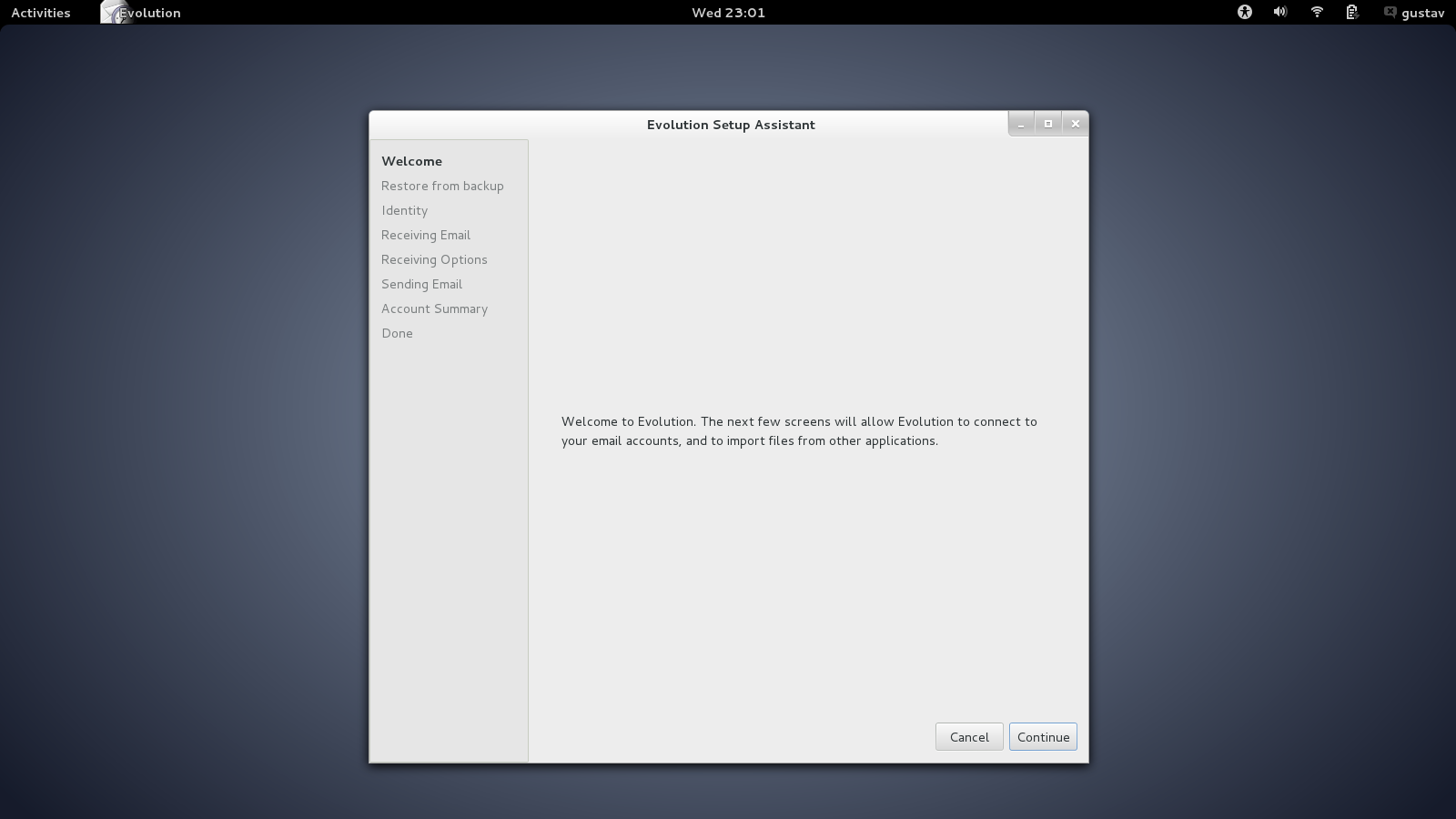
First you might want to get the “minimize, maximize and close” windows-buttons which aren’t default in Debian 7–only the close window-button is there. From the desktop go to Activities menu to the top left and select Programs >System Tools and the “dconf-editor.” There are a lot of menus here to open so look carefully. Click Org >Gnome >Shell >Overrides. To your left you’ll find the “button layout” row. Type “:minimize,maximize,close” without quotation marks and then hit enter.

**If you’re finding this article useful, please consider helping us reach our absolute minimum daily goal of $34 today so our FOSS Force Independence 2026 fundraiser stays on track for April. Any amount helps.**

Evolution screenshot
Evolution–the default email client in Debian
Flash player is a must these days so let’s get that next.

Gustav Fridell

Gustav Fridell is a self-described “hard working family man” who resides in Stockholm, Sweden. He has been using Linux since August, 2010 and enjoys testing different distros.

Debian Tops Our Community Distro Poll

The results have been tallied and Debian got the most votes in our Community Distro Poll. We would call them the “winner,” but this wasn’t about winners and losers. It was about trying to reach a consensus on what we mean by the term “community distro.” We asked, “Which GNU/Linux distros do you consider to be legitimate community distros?” Choices weren’t limited to one; voters could choose as many as they wanted and even add more through a text box supplied by choosing “Other.”

**If you’re finding this article useful, please consider helping us reach our absolute minimum daily goal of $34 today so our FOSS Force Independence 2026 fundraiser stays on track for April. Any amount helps.**

CentOS Tops Our Web Server Poll

The polls are closed. The votes have been counted. CentOS hands down wins our Web Server OS poll.

About six weeks ago we offered-up a list of six GNU/Linux distros and asked which you’d choose for your web server if you were limited to the distros on that list. The list was composed of what we’ve found to be the most frequently offered Linux OS choices by web hosting companies for their virtual private server (VPS) or dedicated server customers. We offered each of the six in both their 32 bit and 64 bit implementations, which is also usually the case with web hosting companies.

**If you’re finding this article useful, please consider helping us meet our absolute minimum daily goal of $34 so our FOSS Force Independence 2026 fundraiser stays on track for the month of April.**

CentOS web server winnerMissing from the list were two distros that are almost exclusively associated with server environments, Red Hat and SUSE Linux Enterprise. They were not included in our list because they’re rarely offered without additional cost by hosting companies because they’re not freely available to download and install.