Press "Enter" to skip to content

Posts tagged as “Linux”

Freeware: Looking a Gift Horse in the Mouth

Just because software is free doesn’t mean it’s free software.

This may confuse those who only know the Windows world, where the software animal known as “freeware” is readily available but truly free software is a bit more scarce. They may be excused for thinking, when we Linux users talk about “free software,” that they use free software too. After all, doesn’t a free antivirus program qualify as free software? Or what about that gee-whiz free password manager that’ll generate and store five or six passwords–more if the “pro” version is purchased?

Linux users will also be excused for rolling their eyes before answering, “Nope. Neither of those examples is what we mean by ‘free software.'”

Are There Too Many Linux Distros?

Since I’ve been following Linux and FOSS (thirteen years or so by my estimation), questions regarding choice, or too much of it, have been bandied about in Linux circles. Some penguinistas point proudly to the long list of GNU/Linux distros, proclaiming choice to be wonderful and a positive aspect of life in the land of Linux. Others bemoan the sheer number of distros, saying having so many of them has made Linux confusing for newcomers and is otherwise inefficient.

I’ve always considered this to be a rather nonsensical discussion. To begin with, it is what it is. There are a gazillian distros out there, whether we like it or not, and complaining there are too many accomplishes absolutely nothing but to make the complainers out to be whiners–but that’s just my humble opinion.

Christine Hall

Christine Hall has been a journalist since 1971. In 2001, she began writing a weekly consumer computer column and started covering Linux and FOSS in 2002 after making the switch to GNU/Linux. Follow her on Twitter: @BrideOfLinux

Second Round of Our Best Personal Linux or FOSS Blog Competition

We were hoping to have 20 to 25 blogs for you to choose from here in round two of our competition to see who wins the honors as FOSS Force Best Personal Linux or FOSS Blog–2013. We end up offering you a total of 19.

Voters in our qualifying poll that finished at noon today wrote-in plenty of web sites for us to consider. The trouble was, most of them didn’t meet the criteria we set-out in the article titled What’s Your Favorite FOSS or Linux Blog? which was published on July 29th when we began this competition.

To a degree, we expected that. We knew some voters would write-in names of great Linux sites that in no way qualify as personal blogs. That they did, placing votes for many of our favorite sites and for some we think downright silly. So we first cleared out votes for sites that obviously don’t qualify, such as Omg! Ubuntu!, phoronix and OStatic.

After taking care of that task we were left with a long list of sites. As most were unknown to us, we had

And Your First Linux Distro Was…

Back on June 23, when we asked you to name the first Linux distro you ever used, we pretty much knew that the choice “Other” would take the day.

That’s because we wanted to be completely neutral, so the ten choices we offered besides “Other” were just the top ten distros from the Distrowatch “Page Hit Ranking,” which meant that those who started their Linux life with something other than Debian or SUSE in the pre-Ubuntu era were not represented.

Why Mark Shuttleworth Is Important to Desktop Linux

If you want to see desktop Linux finally get some traction with the unwashed public, Mark Shuttleworth is more likely to be the guy who’ll make that happen than anyone who’s come along so far. He’s a capitalist and for better or worse this is a capitalist world. He knows that nothing big is going to get done on this market oriented planet without the art of the deal and some hustle. He also understands something about fit and finish, which was always lacking in desktop Linux until he came along.

For too long, we’ve been sitting around wringing our hands, sometimes proclaiming this to finally be the year of the Linux desktop without doing anything to make it happen and sometimes bemoaning the fact that the world still hasn’t discovered Linux as the secret to computing happiness. The thing is, the world never knows anything about secrets until they’re not secret anymore. We’ve been wanting Linux to just “catch on,” while we’ve been blaming the OEMs for not automatically pushing our home grown geek-centric distros with the same elan they put behind their bread and butter Windows.

Christine Hall

Christine Hall has been a journalist since 1971. In 2001, she began writing a weekly consumer computer column and started covering Linux and FOSS in 2002 after making the switch to GNU/Linux. Follow her on Twitter: @BrideOfLinux

What If Ubuntu Edge Misses Fundraising Goal?

It’s beginning to look as if the naysayers are right about Mark Shuttleworth’s hopes to raise $32 million to produce about 40,000 Ubuntu Edge devices. It ain’t going to happen, unless he manages to pull another rabbit out of the hat. Right now, his Indiegogo campaign is stalled at a little over $7 million, where it’s been for several days.

I’m not going to go into the details that led to this, we’ve covered that already, but it’s beginning to look like the Ubuntu Edge happy train is running out of steam, especially since about half of the money raised came in the first day or two of a campaign that’s now in day nine.

Christine Hall

Christine Hall has been a journalist since 1971. In 2001, she began writing a weekly consumer computer column and started covering Linux and FOSS in 2002 after making the switch to GNU/Linux. Follow her on Twitter: @BrideOfLinux

Eolas Doesn’t Own Internet, Ubuntu Hacked & More…

FOSS Week in Review

Ubuntu Edge–computing on the go-go

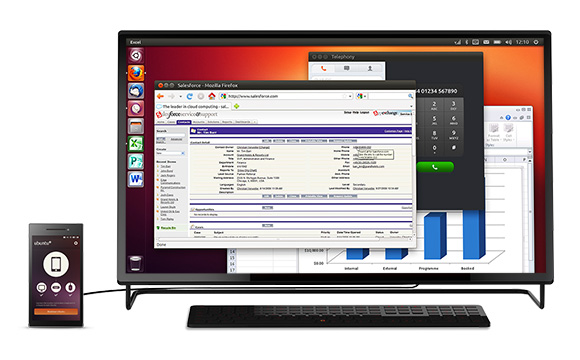
Probably the biggest news in all of tech this week, not just the FOSS world, came with Canonical’s announcement on Monday of the Ubuntu Edge. In case you’ve been away camping somewhere all week, the Edge is a hybrid device that can function both as a high end smartphone, running either Android or Ubuntu Touch, or it can be hooked up to a monitor, keyboard and mouse to work as a conventional PC running Ubuntu Linux.

That news alone would be dumbfounding enough, but as the pitchman on TV always says, “Wait! There’s more…”

NSA Exposes Cloud Computing’s Weakness

Cloud computing was always a bad idea.

Not totally bad, mind you. It has its place. I use Google Docs/Drive or whatever they’re calling it this week sometimes so I can work on articles on the computer at my day job without leaving a mess behind on the bosses hard drive. But mostly cloud computing has always been a bad idea.

Ask Richard Stallman; he’ll tell you. Or ask me.

Christine Hall

Christine Hall has been a journalist since 1971. In 2001, she began writing a weekly consumer computer column and started covering Linux and FOSS in 2002 after making the switch to GNU/Linux. Follow her on Twitter: @BrideOfLinux