
Sometimes we wonder how Ms. Joseph finds the time to balance her career at HP with writing, evangelizing Ubuntu and public speaking, along with an…
FOSS Force
So far, this entire story is summed up by the above headline. Until we know more, that’s all we know.
A disturbing story broke this morning concerning the sudden action by the Libreboot project to leave the GNU project. I started to write “potentially disturbing,” until it occurred to me that no matter how this plays out, the news is disturbing.
** If our coverage matters to you, please consider supporting our work through our FOSS Force Independence 2026 fundraiser. **
 Libreboot is a project that produces free, open source and blob-free software to replace proprietary BIOS firmware that performs only the tasks necessary to load and run an operating system. The project is endorsed by the Free Software Foundation and was an official part of the GNU Project from May 14 until today. This morning Libreboot’s main developer, Leah Rowe, announced in an email to the GNU mailing list that she is pulling Libreboot from the GNU Project.
One of the many things we like about Ms. Schroder is that she makes difficult technology easy to understand. She’s also fun to read. And as you’ll discover in this interview, she’s also a quick wit who won’t be backed into a corner.
The FOSS Force Video Interview
Carla Schroder sometimes describes herself as an “Ace Linux guru,” which is as good a way to tell you who she is as any — at least in the Linux context. She’s written so much, in so many places, that it’s easier to give you a single Google link to her work than to list a whole stack of articles, plus three O’Reilly books. The single article I’ll point you to on its own is one Schroder wrote for Opensource.com in July, 2016, titled I’ve Been Linuxing Since Before You Were Born.
**
If you're finding this article useful, please consider supporting our work through our FOSS Force Independence 2026 fundraiser.
**

Even you could become a world famous blogger. The lightweight blogging platform Ghost and a Raspberry Pi is all it takes.
The Raspberry Pi Report
I’ve read that a fun and easy thing to do with a Raspberry Pi is to set it up as a dedicated blog server. I’ve never really had my own blog, so I decided I would give this project a shot. I hope that this article serves as a guide for those of you who would like to start a blog or who have a Raspberry Pi that’s not doing anything and are looking for a worthy project.
** If our coverage matters to you, please consider supporting our work through our FOSS Force Independence 2026 fundraiser. **
 Hardware: I’m using a Raspberry Pi Model 2 B with a 32-bit SanDisk micro SD card. The reason for using the Model 2 B is because I happened to have one that wasn’t currently being used. Also, I wouldn’t need any of the extras, like Wi-Fi. that the Raspberry Pi 3 brings to the table since it will be connected via Ethernet and SSH.
Is it “organic,” or just merely “natural?” Is it really “open source hardware,” or merely hardware with a degree of openess? David Jones explains the problem in identifying which is which and who is whom.
The Video Screening Room
David L. Jones, an electronics design engineer based in Sydney Australia, explains his pragmatic solution to the use of the open source hardware logo — inspired by the varying gradations of the Creative Commons licenses.
**
If you're finding this article useful, please consider supporting our work through our FOSS Force Independence 2026 fundraiser.
**
Also included: Creative Commons wins in Austria, two new distro releases, a new version for Solus’s Budgie, KDE goes Wayland and Mageia supports DNF.
FOSS Week in Review
Damn if the days aren’t already getting too short for this old soul who no longer feels comfortable driving after dark. This is made worse by the fact I live way out in the country — miles from nowhere, as they say — meaning I’m pretty much stuck in the house at night. The good news is, this means that these days I’m getting a lot of writing done.
**
If you're finding this article useful, please consider supporting our work through our FOSS Force Independence 2026 fundraiser.
**
Now on to this weeks FOSS news…
Around since 2005, and with its Kiki the Cyber Squirrel mascot since 2012, Krita is a free and open source raster graphics editor designed to be a digital painting application similar to Corel Painter.
The Video Screening Room
The popular Krita painting program keeps getting even better. This new beta release of 3.01 includes features added from Google Summer of Code programmers. This screencast does a very good job explaining the new features, including new animation tools.
**
If you're finding this article useful, please consider supporting our work through our FOSS Force Independence 2026 fundraiser.
**

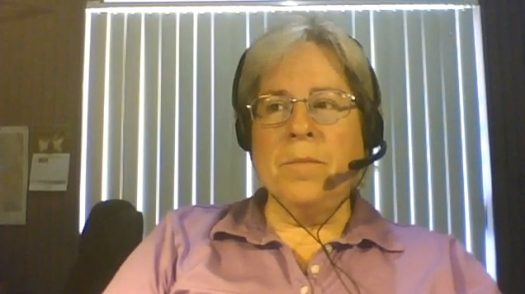
All we can say is watch this interview with Christine Hall and you’ll know what we have to put up with on a daily basis — equipment that’s not quite up to par and a boss who’s a refugee from The Addams Family.
The FOSS Force Video Interview
Yes, that Christine Hall. The one whose byline you often see on this very site. Recorded under lousy lighting with a 10-year-old (or older) webcam that was probably lousy new, this video is about information, not cinematography. So meet Christine Hall. Listen to what she says about looking for contributing writers. Does she mean you? It’s possible. If you have a story idea, please send it to her. We could see [YOUR NAME] in lights right here on FOSS Force!
** If our coverage matters to you, please consider supporting our work through our FOSS Force Independence 2026 fundraiser. **

Everything you ever wanted to know about VLC but were afraid to ask.
The Video Screening Room
VideoLAN (also called VLC) is a very popular media player available for all major technology platforms. Work is progressing towards a 3.0 release and in this new video you can meet some of the developers working to make that happen.
** If our coverage matters to you, please consider supporting our work through our FOSS Force Independence 2026 fundraiser. **
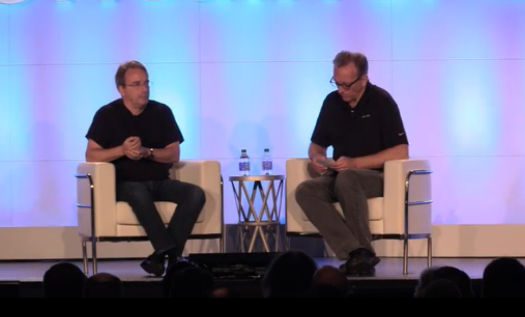
In the last of our three part series that began last week on Linus Torvalds’ keynote interview at this year’s LinuxCon, Linux’s lead developer talks about everything from up and coming operating systems in IoT to the development process.
“You mentioned the strength of the GPL,” Dirk Hohndel said, by now about twenty minutes into his interview of Linus Torvalds at LinuxCon 2016. “Many new kernels have shown up in the last couple of years, mostly geared towards really small devices, the IoT space: Zephyr by Intel, Fuchsia by Google and a bunch more.”
If you are who you work for now, Dirk Hohndel is VMware’s boy. But at the time of the interview, only a few weeks back, he’d been working as VMware’s chief open source officer for less than a month. For almost fifteen years before that — fourteen years nine months he’s careful to point-out on LinkedIn — he belonged to Intel, where he served as chief Linux and open source technologist. Before that he spent six years at SUSE, where he was CTO when he left in 2001, two years ahead of the Novell brouhaha.
**
If you're finding this article useful, please consider supporting our work through our FOSS Force Independence 2026 fundraiser.
**
“One of the interesting commonalities is they’re all under BSD or MIT,” he continued. “Do you think they’re interesting and do you think that one of them could grow up and become a competitor for Linux or replace Linux?”