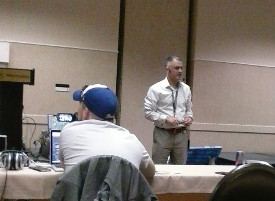
The SouthEast LinuxFest (SELF) was packed on Saturday, meaning that Jeremy Sands (who told me that day two is always much busier than opening day) knows SELF. Maybe I should’ve asked his advice when I was booking my room in Charlotte. Here’s what I learned on my own: There’s a big difference between a Red Roof and a Red Hat. The later is dependable. The former took three tries to get me into a room that was kinda/sorta what I’d reserved — with Wi-Fi that didn’t work more often than it did.
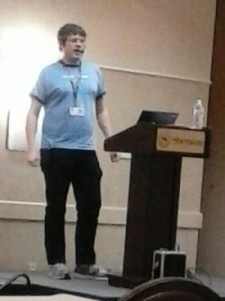
Francois Dion’s keynote, “Team Near Space Circus: Computing at 80,000 Feet” was nothing if not fascinating, and I was happy to get filled in on the details of a story I knew a little about because it happened in my backyard, meaning the Winston-Salem, N.C. area (in Mocksville, if you’re planning to take the test).

Christine Hall has been a journalist since 1971. In 2001, she began writing a weekly consumer computer column and started covering Linux and FOSS in 2002 after making the switch to GNU/Linux. Follow her on Twitter: @BrideOfLinux
 Somehow I managed to get up on time to make the hour and a half trip from my house to the Charlotte area in plenty of time for the 9 A.M. opening, groggy from only getting about three hours sleep, then wondered why I bothered arriving early. After all, the first presentation I planned to attend wasn’t until 11:30, and with no keynote address scheduled for Friday morning, that left me with a lot of time on my hands.
 Newer converts to open source probably don’t know much about the site, but it wasn’t long ago when Linux users were very aware of SourceForge and how to use the service, at least well enough to download software — perhaps more aware than they wanted to be. It was the go-to site when looking for a program not available in a particular distro’s repository. Not anymore. Not for a while. These days, the more important projects have either migrated to GitHub or are hosting their own.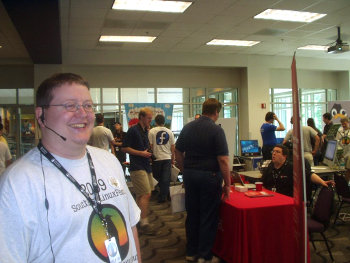

 At the height of the media frenzy that developed around Snowden’s initial revelations, there were allegations that Microsoft had not only built back doors in its software for the NSA and other government agencies to use against foreign businesses and governments, but that it was cooperating with U.S. authorities in other ways as well. For example, one report indicated that the company was passing along details of unpatched security vulnerabilities in Windows to the NSA, effectively adding temporary tools to the spy agency’s cyber arsenal.
 We’re 31 days into our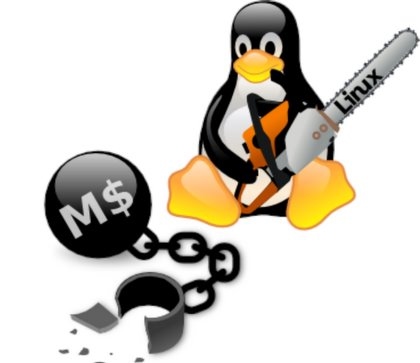
 Quite simply, most of us use desktop Linux because it’s superior to all other brands, including Windows and OS X — even including Unix and the BSDs. This is a fact, not an opinion. There are reasons why Linux runs a majority of the world’s servers and powers most big enterprises, and in an example of where the trickle down theory actually works, those reasons trickle down (or up — depending on your viewpoint) to the desktop.