
These are the ten most read articles on FOSS Force for the month of November, 2016. 1. Linux Foundation ‘Fails’ Linux Mint: Suggests Upgrade to…
FOSS Force
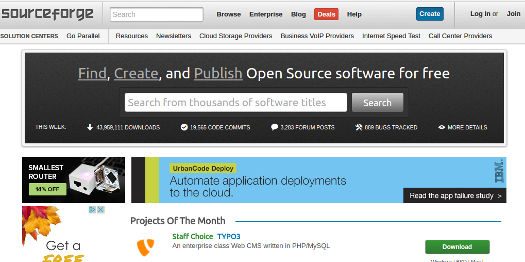
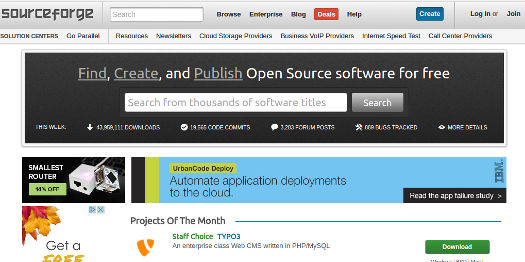
SourceForge says, “With a single click, projects can opt-in to switch their web hosting from HTTP to HTTPS.”
SourceForge has added a feature that gives project websites the opportunity to opt-in to using SSL HTTPS encryption. Project admins can find this option in the Admin page under “HTTPS.”
**If you’re finding this article useful, please consider helping us reach our absolute minimum daily goal of $47 today so our FOSS Force Independence 2026 fundraiser stays on track for April. Any amount helps.**
Opting-in will also trigger a domain name change, from http://name.sourceforge.net to https://name.sourceforge.io. Visitors using the old domain will automatically redirect to the new domain.
Mirai is exposing a serious security issue with the Internet of Things that absolutely must be quickly handled.
Until a few days ago, I had been seriously considering replacing the 1999 model Apple Airport wireless router I’ve been using since it was gifted to me in 2007. It still works fine, but I have a philosophy that any hardware that’s more than old enough to drive probably needs replacing. I’ve been planning on taking the 35 mile drive to the nearest Best Buy outlet on Saturday to see what I could get that’s within my price range.
**If you’re finding this article useful, please consider helping us meet our absolute minimum daily goal of $47 so our FOSS Force Independence 2026 fundraiser stays on track for the month of April.**
After the news of this week, that trip is now on hold. For the time being I’ve decided to wait until I can be reasonably sure that any router I purchase won’t be hanging out a red light to attract the IoT exploit-of-the-week.

Ben Franklin flew a kite to discover electricity in lightening. This Scotsman flies kites to generate electricity from wind. The Video Screening Room I was…

Muni, San Francisco’s transit system, is back to normal after being hit by hackers who reportedly sought a $73,000 ransom. Breaking News This adds a…

Also included: FBI hacks 8,000 with single warrant, new Cinnamon desktop release, “government-backed attackers” after journalists, and FOSS Force adds beef to newsfeed.
FOSS Week in Review
Okay, Thanksgiving is over. Let the sales begin. Which reminds me, I have to buy a new cheap Wi-Fi router — cheap being the operative word. Any suggestions?
**If you’re finding this article useful, please consider helping us reach our absolute minimum daily goal of $47 today so our FOSS Force Independence 2026 fundraiser stays on track for April. Any amount helps.**
Otherwise, it’s back to FOSS news…

An investigative team for a Seattle television station discovered that finding malware on clean computers to be an everyday practice at Office Depot.
It appears that the office supply giant, Office Depot, isn’t adverse to tarnishing its reputation if there’s a buck or two to be made in the process.
KIRO TV in Seattle reported on November 15 that it had taken brand new out-of-the-box computers that had never been connected to the Internet to Office Depot stores, both in Washington state and Portland, Oregon, and told the repair desk staff that “it’s running a little slow.” In four out of six cases they were told the computer was infected with viruses and would require an up to $180 fix.
After declining the “fix,” they took the “virus laden” machines to a Seattle security outfit, IOActive, which reexamined the machines. “We found no symptoms of malware when we operated them,” an employee with the firm, Will Longman, said. “Nor did we find any actual malware.”
**
If you're finding this article useful, please consider supporting our work through our FOSS Force Independence 2026 fundraiser.
**

This week, Roblimo again takes a virtual trip up to the Great White North, that would be Canada for the benefit of the NSA and…

There are three basic models for monetizing digital goods on Google Play — freemium, paid apps and advertising supported using Google’s AdMob service. The Video…
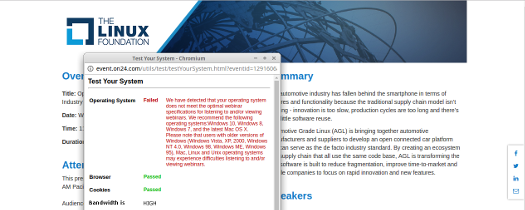
Those using Linux to register for a Linux Foundation webinar are told to try using Windows or OS X instead.
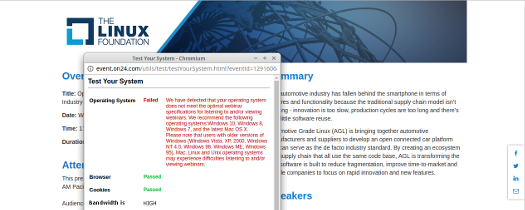
Excuse me if I have a little fun at the Linux Foundation’s expense.
**If you’re finding this article useful, please consider helping us meet our absolute minimum daily goal of $47 so our FOSS Force Independence 2026 fundraiser stays on track for the month of April.**
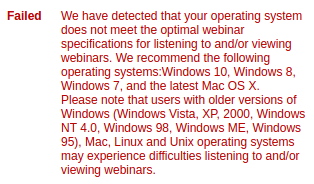 This morning while perusing the day’s tech news, I ran across an article on Linux.com about a free webinar, “Open Source Automotive: How Shared Development Will Drive the Industry Forward,” being hosted on Wednesday by the Linux Foundation. This sounded like something I wouldn’t mind spending an hour watching, so I registered. Afterwards, I clicked a “Test Your System” link, just to make sure that I’d have no problems using the good ol’ FOSS Force machine.